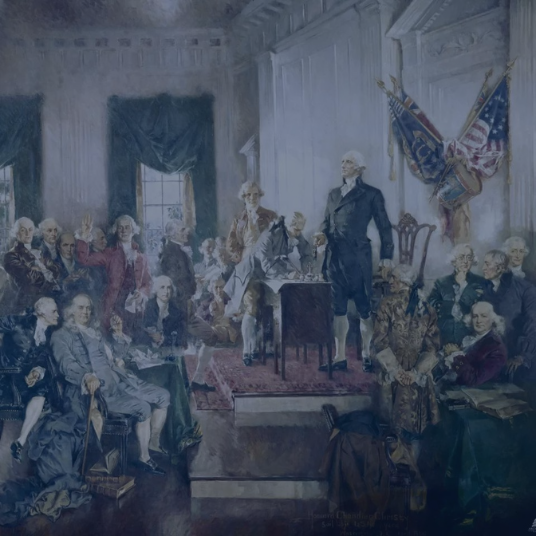
Arkansas Representative Hope Duke authored a strong civics bill requiring the teaching of the Founding Fathers’ religious beliefs and their impact on America’s founding. As a former teacher, Rep. Duke recognized the importance of educating the next generation about the Creator-endowed inalienable rights that form the foundation of our freedoms.
“The purpose of this legislation is for students to learn the intent and meaning behind the documents that created our government. In order for our country to go the right direction, we have to understand the reasoning behind the path our Founding Fathers chose. This bill will ensure students in Arkansas will study how the religious and moral beliefs of the Founding Fathers influenced those decisions. Their intent matters,” said Rep. Duke.
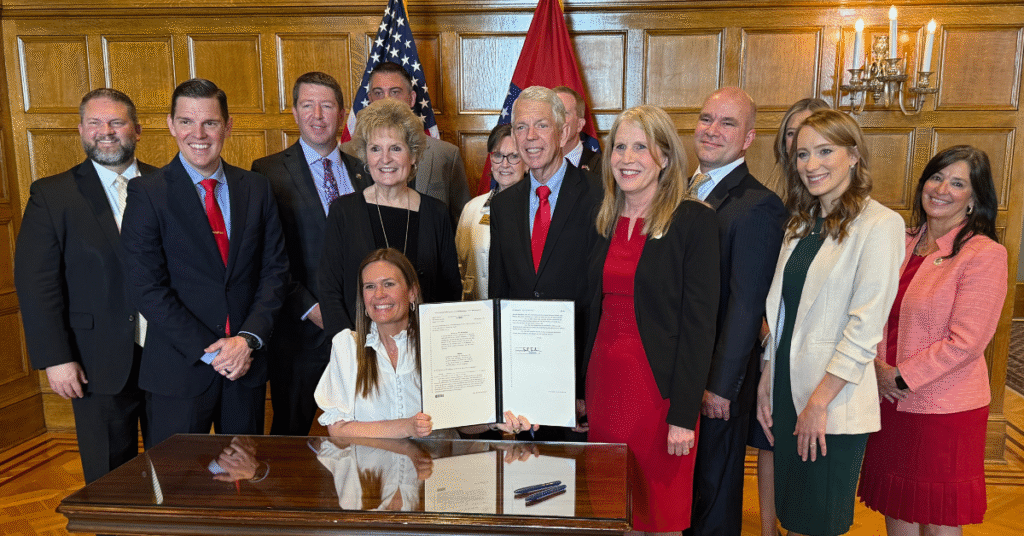
David and Tim Barton testified in support of the bill in the House committee and were honored to stand alongside Rep. Hope Duke as Governor Sarah Huckabee Sanders signed the bill.

The law will ensure students learn:
“How the religious and moral beliefs of the founding fathers influenced the founding of the United States and documents and concepts relevant to the founding fathers’ religious and moral beliefs, including without limitation:
(A) The identity of the “Creator” as viewed by the founding fathers;
(B) The nature of mankind, or “human nature”, as viewed by the founding fathers;
(C) The constitutional requirement for a republican form of government, including the separation of powers and federalism, and the fatal tendency of democracy;
(D) The religious and moral beliefs held by the founding fathers, whereby there is a Creator, and that man is endowed by that Creator with inalienable rights;
(E) The definitions of “religion” held by the founding fathers, particularly as found in Section of the Virginia Declaration of Rights;
(F) Why there was a demand for a Bill of Rights as a condition for the adoption of the United States Constitution;
(G) To what extent the founding fathers recognized historical events and texts, such as the Ten Commandments, the Mosaic Law, the New Testament, and the experiences of the ancient Hebrews, Greeks, and Romans, and these teachings as a basis for American law and public policy;
(H) To what extent the founding fathers recognized the English Common Law, the Magna Carta, and the English Bill of Rights as a basis for American law and public policy; and
(I) How the recognition of inalienable rights in the Declaration of Independence formed the framework for the abolition of slavery in the United States; and How the freedoms enjoyed by the citizens of the United States can be traced to the beliefs of the founding fathers.”
We hope many more states follow Arkansas’s lead by putting strong requirements in place for civics education.
If you would like assistance on legislation in your state, please let us know. We would love to assist you with resources and testimony support.