
Backtracking on the Sanctity of Life: The Dangers of Tennessee’s Recently Passed IVF Bill

By Audrea Decker, Executive Director of the Pro-Family Legislative Network

Tennessee lawmakers just passed legislation that pro-life Americans nationwide should find deeply troubling. The so-called “Fertility Treatment and Contraceptive Protection Act” (HB 533 / SB 449), signed into law by Gov. Bill Lee (R) on April 24, is being hailed by groups like the American Civil Liberties Union (ACLU) as a victory for “reproductive freedom” and a means to limit “political intrusion.” But beneath the surface, this new law undermines Tennessee’s long-standing pro-life practices long opposed by those who believe life begins at conception.

Rep. Chris Todd (R), along with ten other legislators, signed a letter to Gov. Lee urging him to veto the legislation, but he failed to do so, consistent with his track record of not vetoing a single bill to date.

This is not just a Tennessee issue. The fact that Tennessee—a deeply pro-life state—has enshrined this bill into law could pave the way for conservative states across the country to make the same dangerous mistake.

You cannot legislate on reproductive technologies or contraception without first addressing the most fundamental question: When does life begin? For pro-life Americans, the answer is clear—life begins at fertilization. That belief is the cornerstone of laws that protect the unborn.


Pro-life Tennessee lawmakers had a real opportunity to approach reproductive technologies and contraception with care — protecting unborn life while still ensuring parents have access to innovative medical options. But this bill falls far short of that goal.

Let’s examine why this legislation is so problematic.

First, this law creates a statutory right to create and genetically test embryos—with no safeguards.

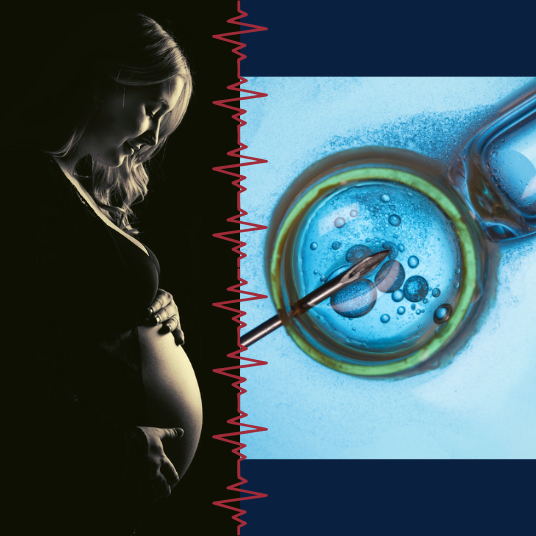
Your embryos — precious, often limited, and possibly your only chance at biological children — should receive ultimate protection. However, in vitro fertilization (IVF) routinely entails the destruction of embryos after genetic testing, if those embryos are deemed “undesirable.” This bill imposes no requirements for safekeeping and fails to clarify whether embryos can be destroyed without consent, through negligence, or who bears responsibility.

Further, the bill directly contradicts Tennessee’s existing pro-life laws that recognize an embryo as a person and stipulate prenatal non-discrimination. These laws are critical to ensure babies are not discarded because of their sex, race, or disability.

Rep. Gino Bulso (R) explained during floor debate that three sections of Tennessee Code recognize embryos as human life; TCA 39-13-107 and TCA 39-13-214 define unborn children as persons at any stage of gestation, while TCA 39-15-213 recognizes life beginning at fertilization.

Rep. Bulsoemphasized, “At fertilization, we bring into existence a new human being. We have all 46 chromosomes, the entire genetic makeup of a human person. Eye color is determined, hair color is determined, every genetic trait that a person later develops is there from the moment of fertilization, also known as conception, forward—which is why we outlaw abortion even at the embryonic stage.”

He added, “If you were to concede that you could kill an embryo, then you have given up any scientific argument to outlaw abortion at any further portion of a pregnancy. Because from fertilization forward, you have the same kind of being.”

That’s the slippery slope Tennessee has just stepped onto. By ignoring the personhood of embryos and endorsing practices that facilitate their destruction, this bill undermines all laws that protect life from the moment of conception.

Meanwhile, researchers are already exploring ethically fraught uses of embryos in experimental technologies, including as a power source to fuel artificial intelligence. Though it sounds like science fiction, this is already underway.

Second, this law codifies access to abortion-inducing drugs.

During debate, bill sponsor Rep. Iris Rudder (R) confirmed that “emergency contraception” in the bill includes Plan B, the “morning-after pill.” Many pro-life voters would be stunned to learn that their Republican representatives just voted to affirm and protect access to such drugs.

However, since this language was wrapped inside a bill labeled “Fertility Treatment and Contraceptive Protection Act,” it becomes easier to obfuscate the real impact. Some lawmakers may not have even realized what they were voting for. Will the rest of the pro-life community in Tennessee and elsewhere know the difference?

Maybe that’s exactly the strategy. Progressive organizations such as the ACLU don’t support pro-life bills—they support bills that advance their radical agenda. Their endorsement of this legislation should have been a red flag.

Other states have taken steps to address IVF-related uncertainty. For example, Alabama legislators clarified in statute that IVF providers cannot be held criminally liable for the death or damage of an embryo, but are still vulnerable to civil liability. Georgia enacted simple language this session ensuring that IVF remains legal without undermining other pro-life statutes.

Tennessee went much further. Rather than clarifying existing laws or protecting parents and embryos, Tennessee legislators created broad new “rights” to abortion-inducing drugs and reproductive technologies that could be used to pressure insurance providers and employers. Moreover, it could violate the religious or moral beliefs of Tennesseans who object to the destruction of unborn life.

The Bottom Line

Tennessee’s law may have been crafted with good intentions—to support families and ensure access to fertility treatments—but its consequences are dangerous. It permits genetic testing that leads to embryo destruction, creates new rights to use drugs like Plan B, and stands in direct contradiction to Tennessee laws that have protected life from the moment of fertilization for decades.

Ultimately, this law has substantially weakened the very statutes that have made Tennessee a national leader in the pro-life movement. Unless pro-life advocates speak up, other states may now follow Tennessee’s example. Lawmakers in other states should see Tennessee’s new law as a cautionary tale, not a blueprint. And Tennessee lawmakers must act swiftly next session to undo the damage before it spreads.

If you would like assistance with similar legislation in your state, please reach out to us at PFLN. We are here to assist you.
Unborn Children Are Being Harvested to Create Human Batteries. This Must Stop.

By Jack McPherrin

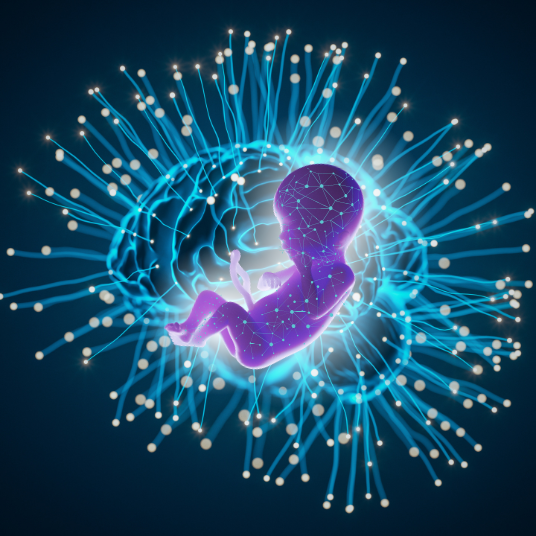
In recent decades, tremendous breakthroughs in stem cell research and application have allowed a myriad of new medical treatments for diseases and conditions once thought uncurable, which is generally a good thing for society. However, some novel stem cell research has clearly breached a serious ethical line, such as the use of embryonic stem cells to create synthetic organoids for biocomputing. Ultimately, unborn children are being harvested as an energy source to power rapid advancements in artificial intelligence (AI), a development that should deeply concern every person on this planet.

AI consumes energy at an unprecedented scale, which has led to equally unprecedented global appetite for more efficient energy sources. For instance, a simple query to ChatGPT requires approximately 10 times more energy than a typical Google search. As a result, those who use AI—which is already most individuals and companies to some degree—are desperately searching for ways to consume less power and cut their rapidly rising costs.

To meet that demand, scientists have begun embracing the concept of biocomputing, something that until very recently has been purely in the realm of science fiction. Biocomputing is essentially a merger between biology and computer technology. And, biocomputers have already been built out of a combination of lab-grown human brain tissue with electronic circuitry.

For example, Swiss tech startup FinalSpark is now selling biocomputers that consist of four miniature lab-grown human brains—called organoids—that are embedded with silicon chips. FinalSpark’s cofounder Fred Jordan has said that because of the energy efficiency of these biocomputers, “computing may ultimately become an activity with no ecological footprint,” thereby becoming a poster child of the green energy movement. FinalSpark claims that its product—the Neuroplatform—is up to one million times more energy efficient than current computing hardware.

FinalSpark’s Neuroplatform has already been adopted for biocomputing research by universities around the world, including the University of Michigan in the United States. Other U.S. universities are dabbling in biocomputing as well; the University of Southern California received a $2 million grant from the U.S. National Science Foundation in 2024 to advance its biocomputing efforts.

Some might find this new scientific advancement exciting and see the potential for its application in fields such as energy and medicine. Unfortunately, the reality is that the construction of biocomputers entails a very ethically dark process.

As mentioned, biocomputers are lab-grown human brains outfitted with electrodes. These brains are grown from extracted human stem cells, and are then “taught” to conduct tasks through electrical stimulation or through the injection of chemicals such as dopamine. When these brains perform a task in the way that researchers want, the organoids are “rewarded” with dopamine; if they do not perform a task in a desirable manner, they are “punished” through electric shocks. Further, organoids only survive this process for approximately 100 days, at which point new organoids are grown to replace them.

Putting aside what is essentially the creation, enslavement, forced experimentation, and death-by-torture of a life form for scientific advancement, the sourcing process for stem cell extraction is even darker.

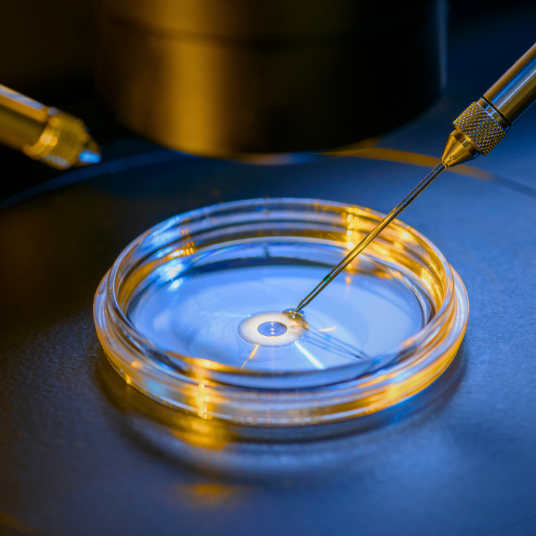
It is well-established that human embryos have been used in stem cell research for decades, though the proliferation of in-vitro fertilization (IVF) has made it much easier for researchers to obtain them. Embryos that are created through IVF but ultimately not used are often donated to universities or scientific institutions for medical research. Concerningly, there is no way to track the amount of embryos that are donated for research, though studies have estimated that up to 59 percent of IVFpatients are willing to do so.

And, because we are unable to track embryo disposition, we also are unable to track exactly how many donated embryos are being used to create organoids for biocomputing. That said, it is very clear that embryos are being used for this purpose.

For example, a study published in the International Journal of Molecular Sciences illustrates the different sources of stem cells that organoids are derived from, including embryonic stem cells, induced pluripotent stem cells, and adult stem cells.

Another study published in Frontiers in Science states,

“The past decade has seen a revolution in brain cell cultures, moving from traditional monolayer cultures to more organ-like, organized 3D cultures—i.e., brain organoids. These can be generated either from embryonic stem cells or from the less ethically problematic iPSC typically derived from skin samples.”

Other sources corroborate the same information. And, scientists seem to have few ethical qualms with using embryos for such research. Harvard Medical School bioethicist Insoo Hyun stated in the journal Cell in 2024: “Since the cognitive bar is set so high for personhood, it seems premature to worry about whether brain organoids, neurological chimeras, or embryo models deserve the same ethical protections normally afforded to persons.”

Ultimately, scientists like Hyun do not consider embryos and unborn life to be truly human, because they are not yet “sentient.” As such, any experimentation with or use of them is justified.

To conclude: we are faced with two problems. One is that we are creating, enslaving, and ultimately killing lab-grown human brains to power artificial intelligence, among other uses. That is disturbing enough on its own. Far more disturbing, especially on an ethical level, is that scientists are using embryos of unborn children to create those brains.

Though there are many ways that policymakers can protect unborn life more generally, there are also ways by which state legislators can stop embryos from being used in this specific manner.

At baseline, a human embryo created through IVF must be clearly defined in state statutes as a fertilized human ovum composed of one or more living human cells and human genetic material that will develop into a child—and therefore have certain rights granted by law. Further, state legislators should expressly prohibit state taxpayer funds from creating, destroying, or risking harm to human embryos in the course of research experiments, including at publicly funded state universities. In concert, state funds should be prohibited from being used to transport fetal tissue across state lines, thereby circumventing the aforementioned prohibitions.

Researchers, scientists, and academics may claim that that such restrictions will halt all their progress on not just organoid creation and a supposed energy-efficient utopia, but also the advancement of other aforementioned “lifesaving” technologies and treatments. First, nothing is truly “lifesaving” if the destruction of unborn life is a prerequisite. Second, the claim is not even true; adult stem cells can easily be used in place of embryonic stem cells and are, in fact, substantially more effective than embryonic stem cells.

Embryos are prenatal human beings. They deserve the same or greater protection as any form of human life, especially from being experimented upon and used as an energy source. It’s up to us to save them from this fate.


Read the op-ed published by The Blaze here.

If you would like assistance with legislation on the topic in your state, please reach out to us at PFLN. We are here to assist you.

 

Pro-IVF Bills Are Proliferating. Pro-Life and Pro-Family Legislators Must Be Wary.

Legislation designed to ensconce the “right” to in vitro fertilization (IVF) has been introduced in several states during the 2025 legislative sessions. IVF is promoted as a way for women and couples that cannot conceive a child naturally to achieve pregnancy. And, while millions of children have been conceived through IVF, the process entails significant risks to the health of women and children that must be more widely understood.

Advocates frame pro-IVF bills as protecting individual rights surrounding the pursuit of creating a family. For example, North Dakota HB 1477 stipulates that “the state or any political subdivision of the state may not implement, administer, or enforce any law, rule, or policy that has the effect of prohibiting, limiting, delaying, or impeding access to assisted reproduction services or fertility treatment, or otherwise violate the rights provided for in this section.”

The bill goes on to list the rights of the individual, which include receiving fertility treatments from health care providers and entering contracts with health care providers to handle, test, store, ship, and dispose of an individual’s reproductive genetic material. Similar bills—pushing the same individual rights-oriented narrative—have been introduced in Texas, Tennessee, Maryland, Vermont, and several other states.

Advocates of these bills are attempting to construct a narrative where anyone who opposes pro-IVF bills is an enemy of freedom, women, children, and families. However, this is a false narrative; nothing could be further from the truth. These bills—written and heavily lobbied for by major players in the fertility industry such as Planned Parenthood—do nothing to protect women or children. The IVF industry is almost entirely unregulated and can cause significant harm to those who are unable to make a choice (children) or are unaware of the risks (women).

Harms to Children

The most obvious and severe harm to children is the violation of a child’s right to life. IVF involves simply discarding embryos that are deemed undesirable, which is the equivalent of aborting children. In fact, more babies are likely killed each year as a result of IVF than through more traditional methods of abortion.

Studies have shown that approximately 7 percent of embryos are ultimately implanted. The remaining 93 percent of embryos—millions of unborn children—are either outright destroyed or indefinitely frozen, with small odds of ever being used. Often, embryos are discarded simply because they are considered “undesirable,” such as being the wrong sex or having genetic abnormalities. The United States is a particularly popular destination for IVF because most U.S. clinics allow for this type of embryo selection, which—while essentially being a form of modern-day eugenics—is incredibly lucrative. Profits to the fertility industry are expected to soar from $18,475 billion in 2021 to $28,236 billion by 2025.

On top of this, the few babies that end up being allowed to survive the IVF process are prone to significant physical, cognitive, and developmental disabilities. Research has indicated that children born through IVF are at higher risk of cardiovascular disease, cancer, brain damage, and other substantial health risks. Studies have also shown that children born through IVF have a much higher risk of cognitive impairment; one study found that IVF babies are 58 percent more likely to have intellectual disabilities by the age of eight or older.

Children created through IVF can also struggle with many different developmental problems. For example, it has been estimated that between 30,000 and 60,000 children per year are born to third parties, which can lead to identity problems stemming from the fact that these children do not know the identities of their biological mother and father.

Further, because these children are born from anonymous sperm or egg donations—which is a largely unregulated process—dozens or even hundreds of half-siblings could be living in the same geographic area and be entirely unaware of it. As those children grow up together, they could accidentally begin incestuous relationships with their relatives and produce offspring of their own.

Harms to Women

As with children, there are many ways that women can be harmed through the IVF process. The earliest stage of IVF entails injecting hormonal medications to stimulate a woman’s ovaries, which can result in several severe side effects, including ovarian hyperstimulation syndrome (OHSS). In severe cases, OHSS can be life-threatening.

During the egg retrieval phase, organs near the ovaries can be damaged. Though uncommon, this can require emergency surgery or even blood transfusions. This phase can also result in pelvic infections; in severe cases, surgery may need to be performed to remove the ovaries, fallopian tubes, and/or the uterus.

Further, IVF makes significant pregnancy complications more likely to occur. Having a pregnancy with more than one baby—such as twins or triplets—is more common with IVF. This poses significant risks to both the mother and/or the children, including high blood pressure, gestational diabetes, maternal hemorrhage, miscarriage, and premature birth—the last of which often leads to lifelong health problems for the child.

Ultimately, as the IVF-induced harms to children and women make clear, opposition to pro-IVF bills is entirely justified. Legislators should not fall prey to the false narrative that any resistance to pro-IVF bills constitutes being an enemy of families and freedom.It is impossible to be pro-IVF while also being pro-women, pro-children, pro-family, and pro-life.

If you would like assistance with similar legislation in your state, please reach out to us at PFLN. We are here to assist you.