WallBuilders’ Pro-Family Legislative Network was recently alerted by legislators in multiple states to a very troubling section introduced into the newly proposed Uniform Commercial Code (UCC) now working its way through 22+ states this legislative session and likely to be introduced in all 50 states.
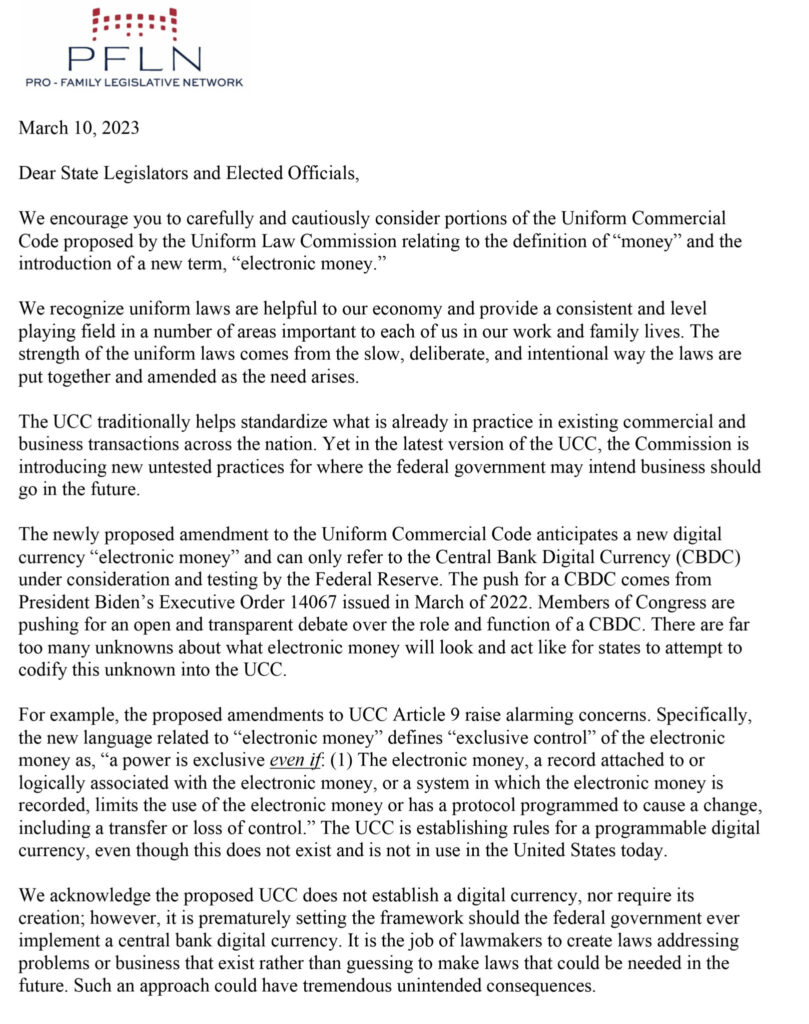
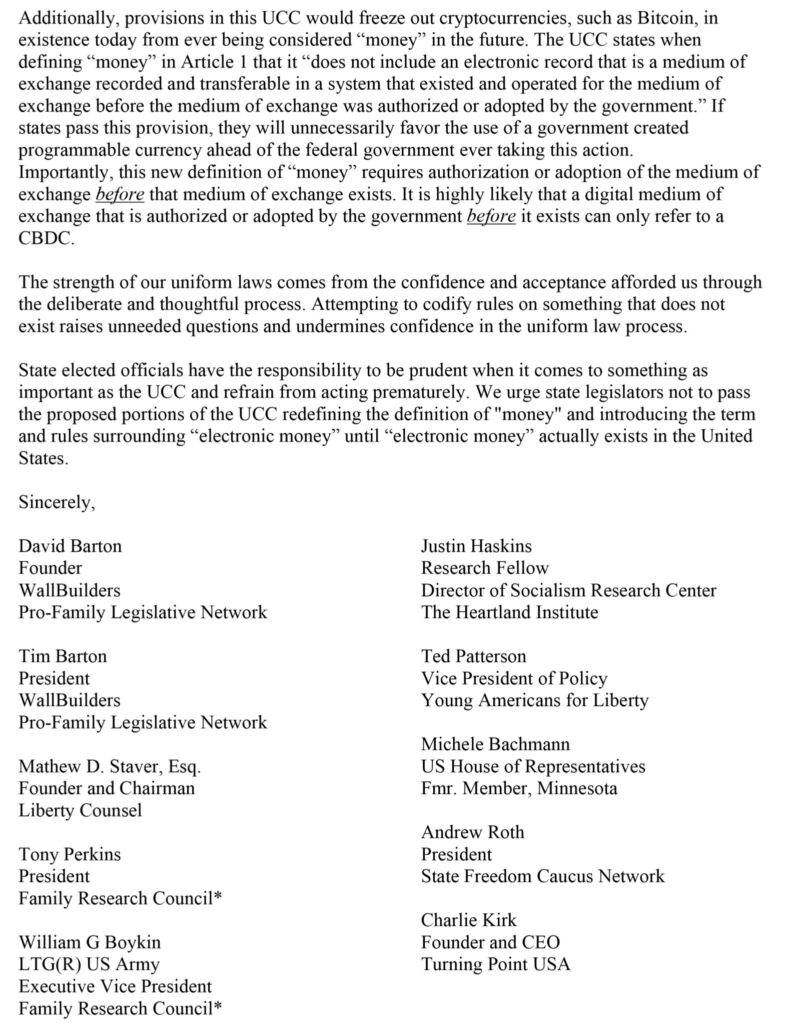
The UCC (first released in 1952) generally helps standardize existing commercial and business transactions across the nation. It traditionally smooths out what is already in practice, but in the new version of the UCC, the Commission has gone on the offensive in one particular area, introducing new untested practices for where the government apparently intends businesses should go in the future.
The troubling change relates to the definition of money and what constitutes electronic currency. Currently, electronic currency does not exist. The disturbing portion of the new Code anticipates a new digital currency, one can only assume it is referencing the Central Bank Digital Currency (CBDC) now under development by the Federal Reserve. The push for a CBDC comes from President Biden’s Executive Order 14067 issued in March of 2022. Members of Congress are concerned over the role and function of a CBDC, for there are far too many unknowns about how electronic money will look and act.
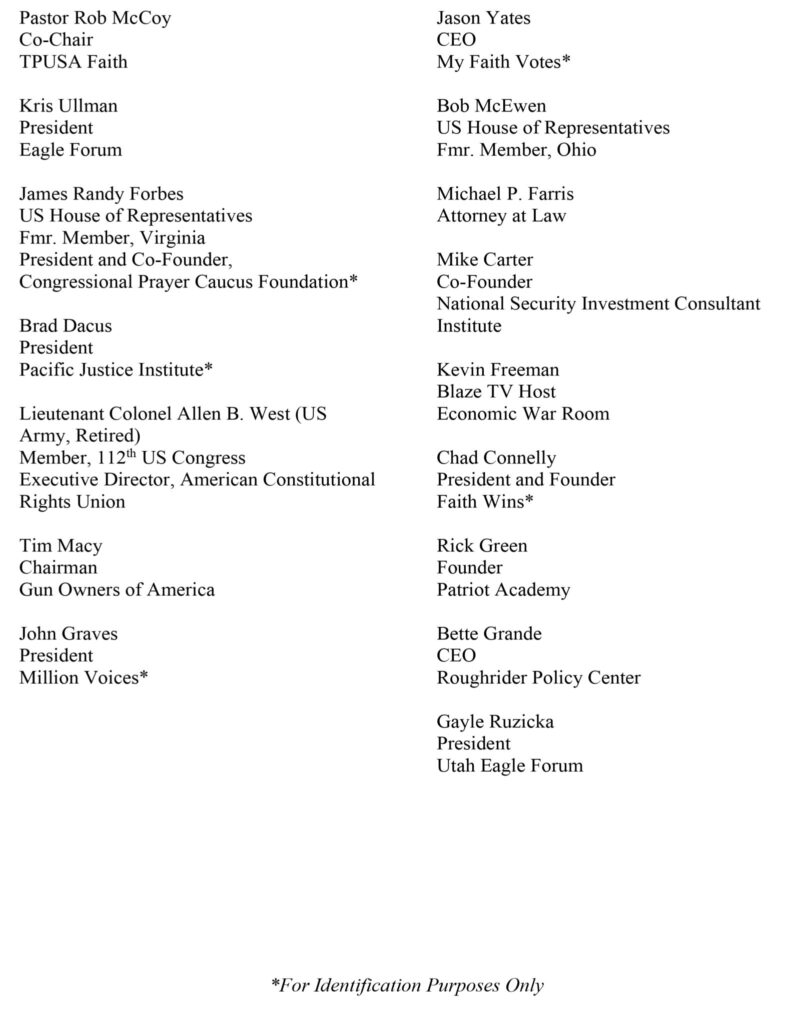
The Uniform Commercial Code has traditionally been viewed by most legislatures as something perfunctory, so it typically receives little scrutiny. As a result, the new version containing the troubling provisions on digital currency has been introduced in two dozen states and has already passed the legislature chamber in states such as North Dakota, Colorado, Hawaii and South Dakota. Gov. Kristi Noem took bold leadership to do what was in the best interest of the citizens of her state and she vetoed the bill in South Dakota due to many of the reasons outlined in the letter below. You can read her veto here.
We encourage you to contact your state legislators and share this coalition letter with them. (You can also download the PDF version here.) Urge them not to pass your state’s Uniform Commercial Code and your governor not to sign this legislation into law if it makes it to his or her desk.
If you are an organization that would like to be included on this coalition letter, please contact us at the Pro-Family Legislative Network for consideration.