AI in Criminal Justice: Reasons for Concern and Recommendations for the Future

The advancement and adoption of AI has occurred so rapidly, state legislatures have their work cut out for them to ensure their state statutes are up to date to address the emerging challenges AI introduces. One of the most serious threats AI poses to Americans is using AI in government agencies, specifically in the criminal justice system. 

The Tip Sheet below states in part: “Artificial intelligence (AI), automation powered by AI, advanced algorithms, and other emerging technologies are now being used in criminal courts across the United States, raising serious concerns about civil rights and the trustworthiness of these tools. Mapping Pretrial Injustice notes that ‘most states’ now use at least one risk assessment algorithm tool (RAT), including various forms of artificial intelligence, to ‘help judges and magistrates decide everything from bail and pretrial release or supervision to sentencing and gravity of parole or probation supervision.’” 

Read the rest of the Policy Tip Sheet here

Reach out to us here if you would like assistance with legislation in your state. For more information on AI, see our Tip Sheets on AI in Banking and AI in ESG.

AI and ESG: How Artificial Intelligence is Being Designed to Advance Left-Wing Goals

Artificial intelligence has the potential to dramatically improve Americans’ quality of life, but it could also be used as a tool by activists, academics, and big corporations to radically transform society, making AI one of the biggest threats to freedom in the world today.

Lawmakers should carefully consider the use of environmental, social governance (ESG) metrics in AI and the implications it could have for their states’ key industries and values.

Read the rest of the Policy Tip Sheet here

Reach out to us here if you would like assistance with legislation in your state. For more information on AI, see our Tip Sheets on AI in Banking and AI in Criminal Justice.

Foreign Ownership of U.S. Agriculture Land: Outlining the Biggest Problems and Potential Solutions

In recent years, America has experienced a remarkable trend: foreign individuals and corporations have amassed millions of additional acres of U.S. agricultural land. Although some organizations have downplayed the significance of this development, there are substantial economic, national security, and freedom-related reasons policymakers should be deeply concerned. 

It is crucial that we address this issue with the seriousness it deserves. The Tip Sheet below contains current statistics on foreign land ownership in the United States,  the risk foreign land ownership poses to Americans, and practical policy solutions legislators can consider for their states. 

Read the rest of the Policy Tip Sheet here

Reach out to us here if you would like assistance with legislation in your state.

Displaying the 10 Commandments in Louisiana Public Schools

​​The law given from [Mount] Sinai was a civil and municipal as well as a moral and religious code; it contained many statutes…of universal application—laws essential to the existence of men in society, and most of which have been enacted by every nation which ever professed any code of laws….Vain, indeed, would be the search among the writings of profane antiquity…to find so broad, so complete and so solid a basis for morality as this Decalogue [the Ten Commandments] lays down.[1] President John Quincy Adams

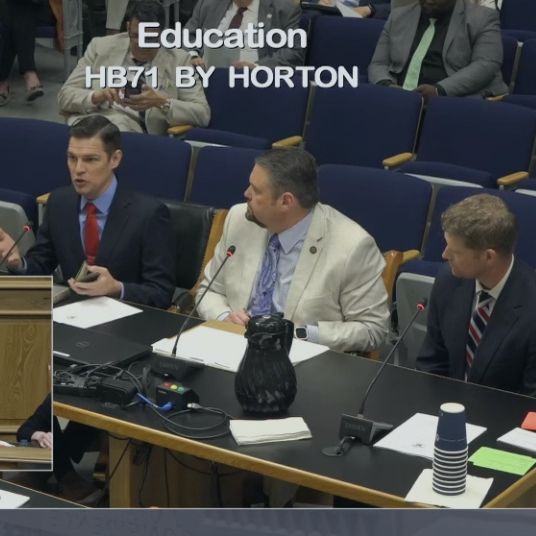
We celebrate the passage and signing of Louisiana’s HB 71, sponsored by Representative Dodie Horton and Senator Adam Bass. The bill allows the Ten Commandments to be displayed in public school classrooms.

Louisiana is the first state in the nation to pass this historic legislation since the Supreme Court rejected the “Lemon Test” and instituted the new “History and Traditions Test.”

What is the Lemon Test?
In 1971 in the case Lemon v. Kurtzman the Court announced its new test for determining the permissibility of public religious expressions. It stipulated that for a public religious activity to be constitutional, it must: (1) have a primarily secular purpose, (2) not advance religion, and (3) avoid creating any government entanglement with religion. As you can imagine, this test prohibited nearly all religious displays of religion. The original religious protections of the First Amendment were thus dramatically curtailed.

Over seceding years, the Lemon Test produced increasingly absurd results. The modern Court has now acknowledged that not only was the test flawed but it held an inherent bias against religion.

The New History and Traditions Test
Nearly 50 years later, the Supreme Court rejected the Lemon Test in its 2019 ruling in the Bladensburg Cross Case. The Court stated, “retaining established religiously expressive monuments, symbols, and practices….gives rise to a strong presumption of constitutionality.”[2]

In other words, if something religious has been part of the fabric of American society and culture for a long period of time (such as crosses, invocations, Ten Commandments displays, et al.), then they must be presumed to be constitutional. This was a dramatic reversal from the Court’s recent decades of decisions, but a clear return to the Constitution’s original intent.

Three years later in 2022, in the cases Shurtleff v. Boston[3] and Kennedy v. Bremerton,[4] the Court openly rejected the Lemon Test.

With the Court’s renouncement of the Lemon Test, the Ten Commandments may once again be permitted in schools as they once were based on the fact that it is part of America’s history, traditions, and the foundation of our law in America.

As President Dwight Eisenhower said so well:

“The blessings of life and the freedoms all of us enjoy in this land today are based in no small measure on the Ten Commandments, which have been handed down to us by the religious teachers of the Jewish faith. These Commandments of God provide endless opportunities for fruitful service, and they are a stronghold of moral purpose for men everywhere.” [5]

If you would like assistance with similar legislation in your state, please reach out to us at PFLN. We are here to assist you.


Sources:

  1. John Quincy Adams, Letters of John Quincy Adams, to His Son, on the Bible and Its Teachings (Auburn: James M. Alden, 1850), 61, 70-71.
  2. American Legion v. American Humanist Association, 588 U.S. __, 2085 (2019).
  3. Shurtleff v. City of Boston, 596 U.S. ___ (2022).
  4. Kennedy v. Bremerton School District, 597 U.S. ___ (2022).
  5. Dwight D. Eisenhower, “Statement by the President on the Occasion of the Jewish High Holy Days,” September 26, 1957, Public Papers of the Presidents of the United States: Dwight D. Eisenhower 1957 (Washington DC: United States Government Printing Office, 1958), 695.

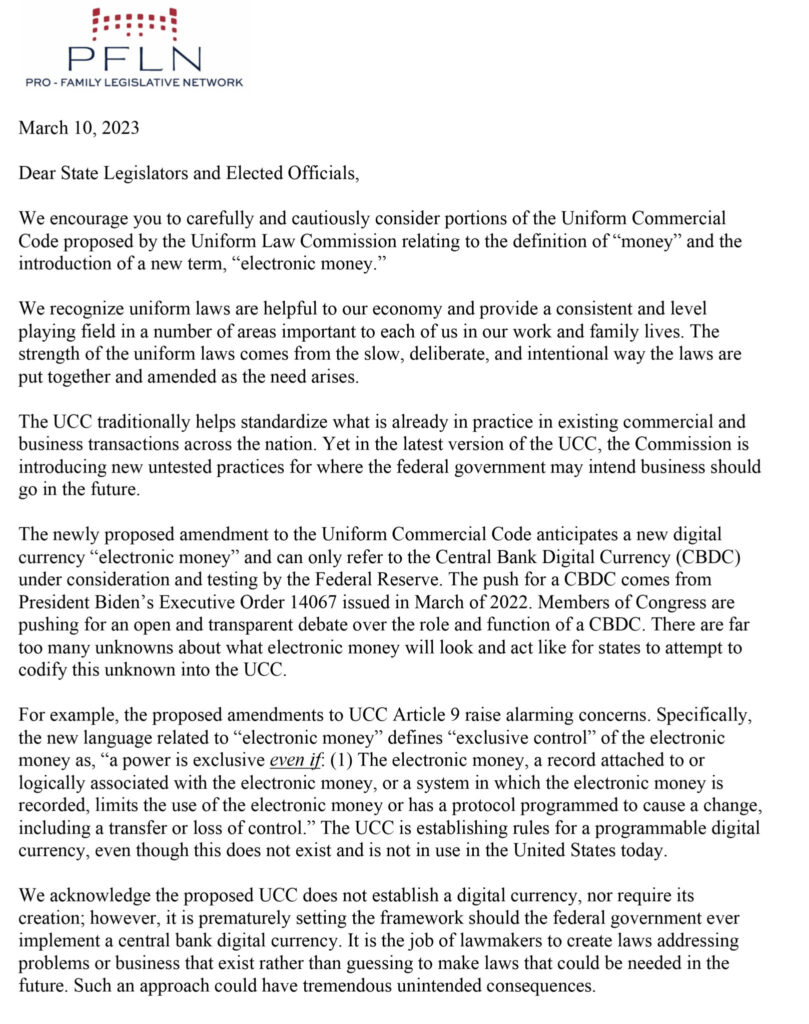
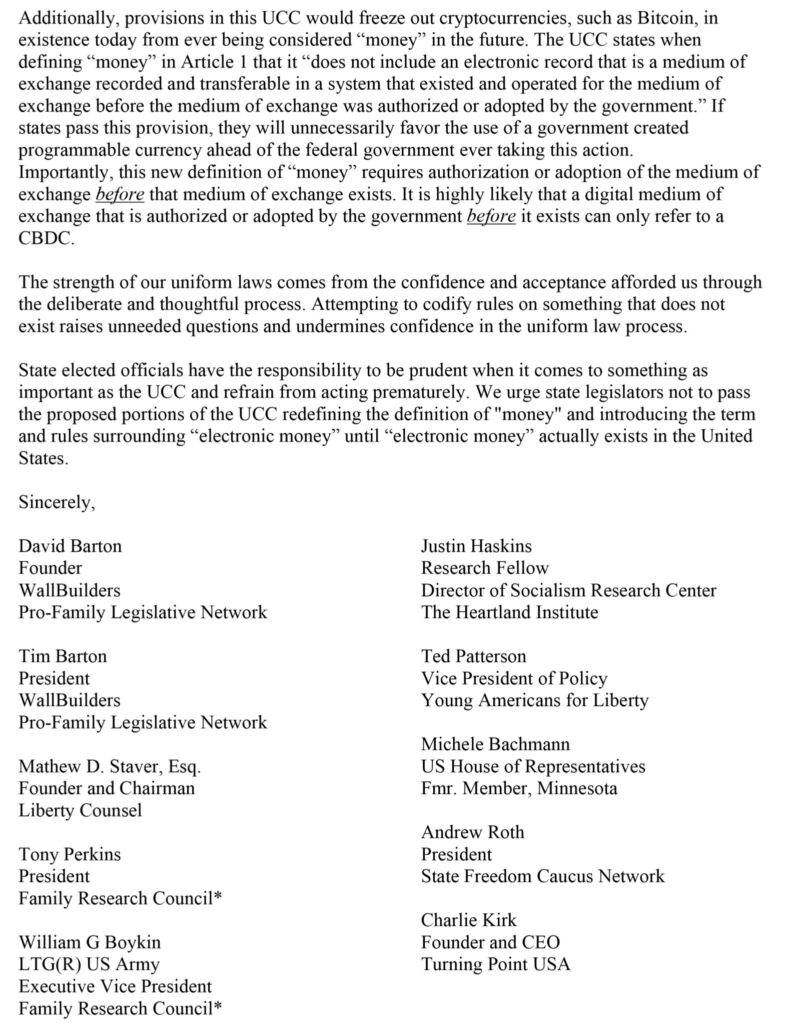
Combat a CBDC: Uniform Commercial Code

WallBuilders’ Pro-Family Legislative Network was recently alerted by legislators in multiple states to a very troubling section introduced into the newly proposed Uniform Commercial Code (UCC) now working its way through 22+ states this legislative session and likely to be introduced in all 50 states.

The UCC (first released in 1952) generally helps standardize existing commercial and business transactions across the nation. It traditionally smooths out what is already in practice, but in the new version of the UCC, the Commission has gone on the offensive in one particular area, introducing new untested practices for where the government apparently intends businesses should go in the future.

The troubling change relates to the definition of money and what constitutes electronic currency. Currently, electronic currency does not exist. The disturbing portion of the new Code anticipates a new digital currency, one can only assume it is referencing the Central Bank Digital Currency (CBDC) now under development by the Federal Reserve. The push for a CBDC comes from President Biden’s Executive Order 14067 issued in March of 2022. Members of Congress are concerned over the role and function of a CBDC, for there are far too many unknowns about how electronic money will look and act.

The Uniform Commercial Code has traditionally been viewed by most legislatures as something perfunctory, so it typically receives little scrutiny. As a result, the new version containing the troubling provisions on digital currency has been introduced in two dozen states and has already passed the legislature chamber in states such as North Dakota, Colorado, Hawaii and South Dakota. Gov. Kristi Noem took bold leadership to do what was in the best interest of the citizens of her state and she vetoed the bill in South Dakota due to many of the reasons outlined in the letter below. You can read her veto here.

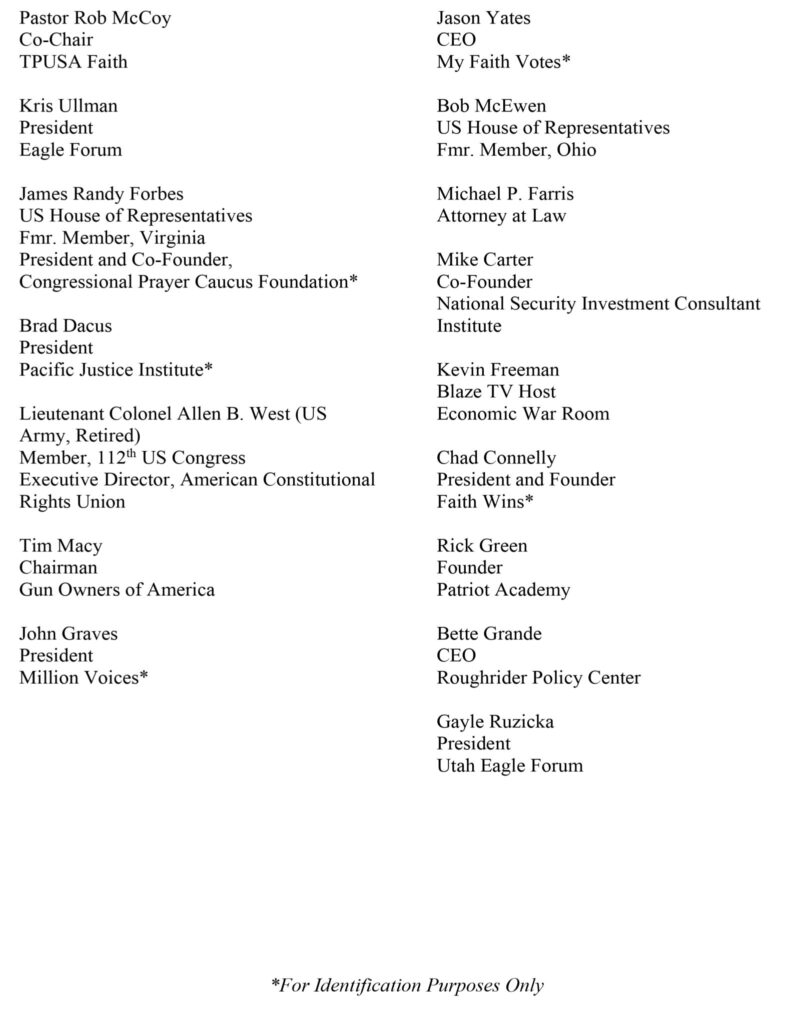
We encourage you to contact your state legislators and share this coalition letter with them. (You can also download the PDF version here.) Urge them not to pass your state’s Uniform Commercial Code and your governor not to sign this legislation into law if it makes it to his or her desk.

If you are an organization that would like to be included on this coalition letter, please contact us at the Pro-Family Legislative Network for consideration.

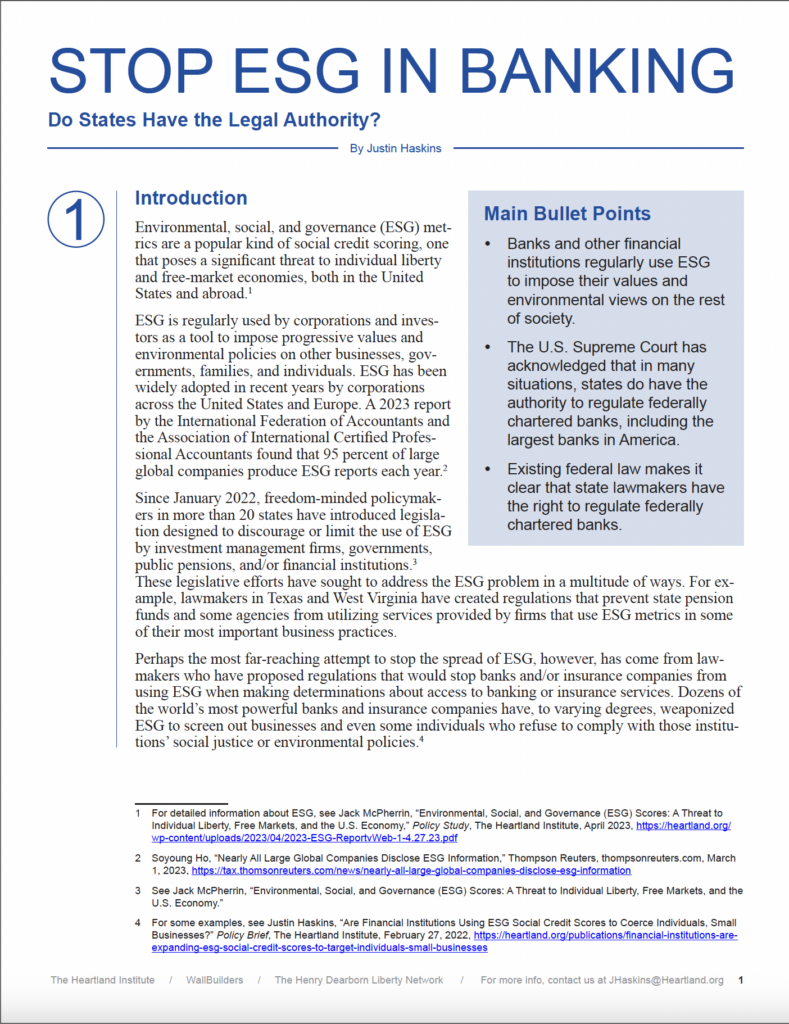
ESG in Banking – States Legal Authority

States nationwide have passed legislation to combat the dangerous environmental, social, and governance (ESG) practices used by asset managers, financial institutions, public universities, and government entities. These policies have included prohibiting the use of ESG in state pension funds and stipulating that state contracts cannot be awarded to companies that use ESG metrics to discriminate against crucial state industries such as oil, gas, coal, lumber, etc.

The most serious threat ESG poses is to individual freedom. And while states have taken action to protect state funds and the use of state resources, very few have passed bills to protect citizens’ essential economic freedom. A couple of the states that have taken decisive action are Florida (2023) and Tennessee (2024). Both have passed bills to ensure banks cannot discriminate against citizens (de-bank them) because of their religious or political beliefs. It is crucial that consumer protection legislation, similar to what Florida and Tennessee have implemented, is enacted in every state in the nation without delay.

The informative paper below, written by Justin Haskins, Director of the Socialism Research Center at the Heartland Institute, outlines states’ legal authority to regulate the use of ESG in banking.

Please get in touch with us if you would like assistance with legislation to combat ESG in your state.

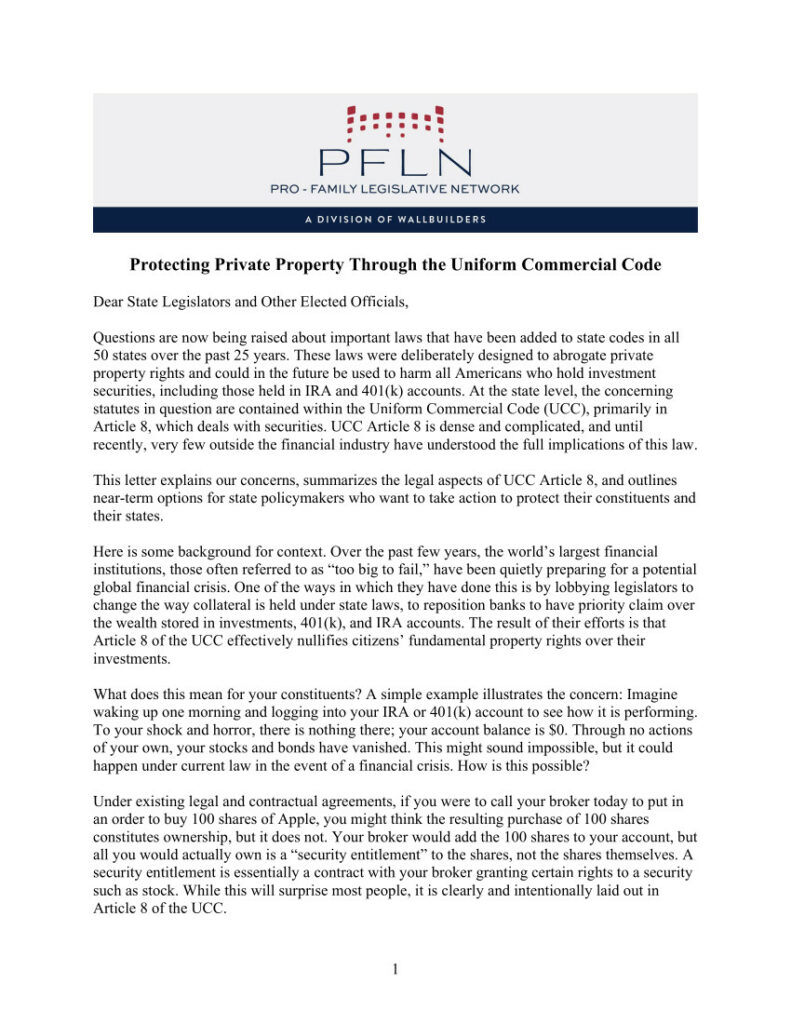
Protecting Private Property Through the Uniform Commercial Code

Questions are now being raised about important laws that have been added to state codes in all 50 states over the past 25 years. These laws were deliberately designed to abrogate private property rights and could in the future be used to harm all Americans who hold investment securities, including those held in IRA and 401(k) accounts. At the state level, the concerning statutes in question are contained within the Uniform Commercial Code (UCC), primarily in Article 8, which deals with securities.

WallBuilders’ Pro-Family Legislative Network (PFLN), and other organizations and leaders, urge state legislators to carefully consider this alarming infringement on private property.

This letter explains our concerns, summarizes the legal aspects of UCC Article 8, and outlines near-term options for state policymakers who want to take action to protect their constituents and their states. Read the full letter for additional information.