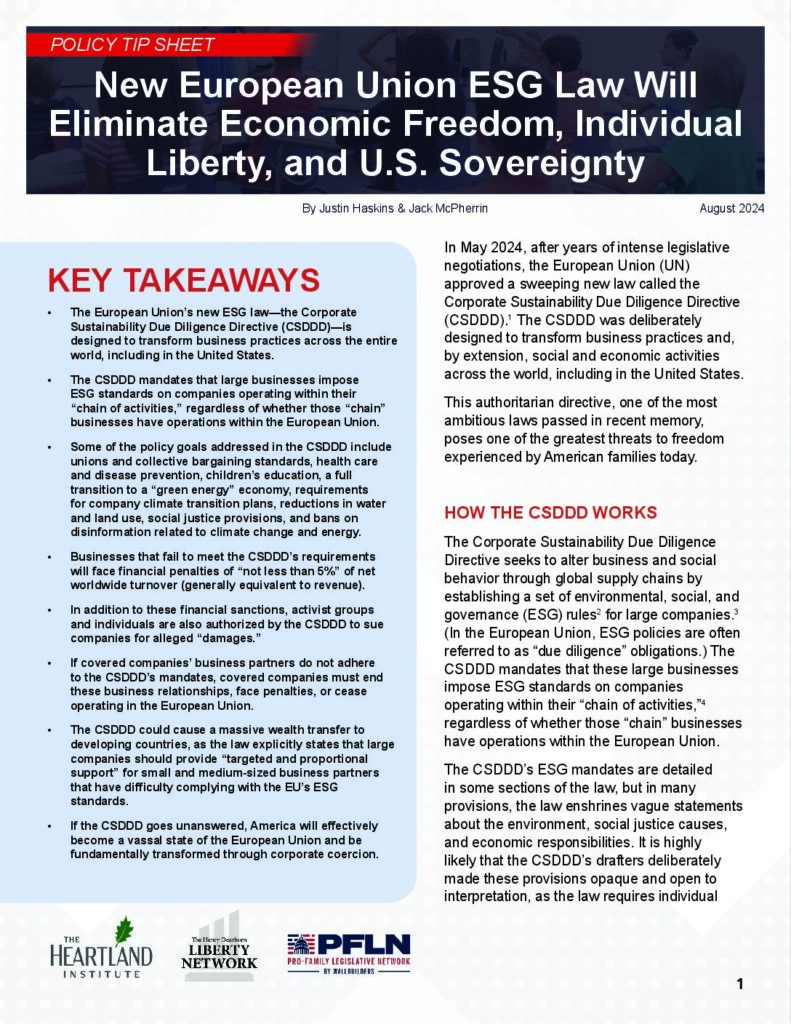
New European Union ESG Law Will Eliminate Economic Freedom, Individual Liberty, and U.S. Sovereignty

In May 2024, after years of intense legislative negotiations, the European Union (UN) approved a sweeping new law called the Corporate Sustainability Due Diligence Directive (CSDDD). The CSDDD was deliberately designed to transform business practices and, by extension, social and economic activities across the world, including in the United States.

This authoritarian directive, one of the most ambitious laws passed in recent memory, poses one of the greatest threats to freedom experienced by American families today.

The informative paper below, written by Justin Haskins and Jack McPherrin of the Heartland Institute, outlines the dangers of this new ESG law, not just for Europe but America as well.

Please get in touch with us if you would like assistance with legislation to combat ESG in your state.

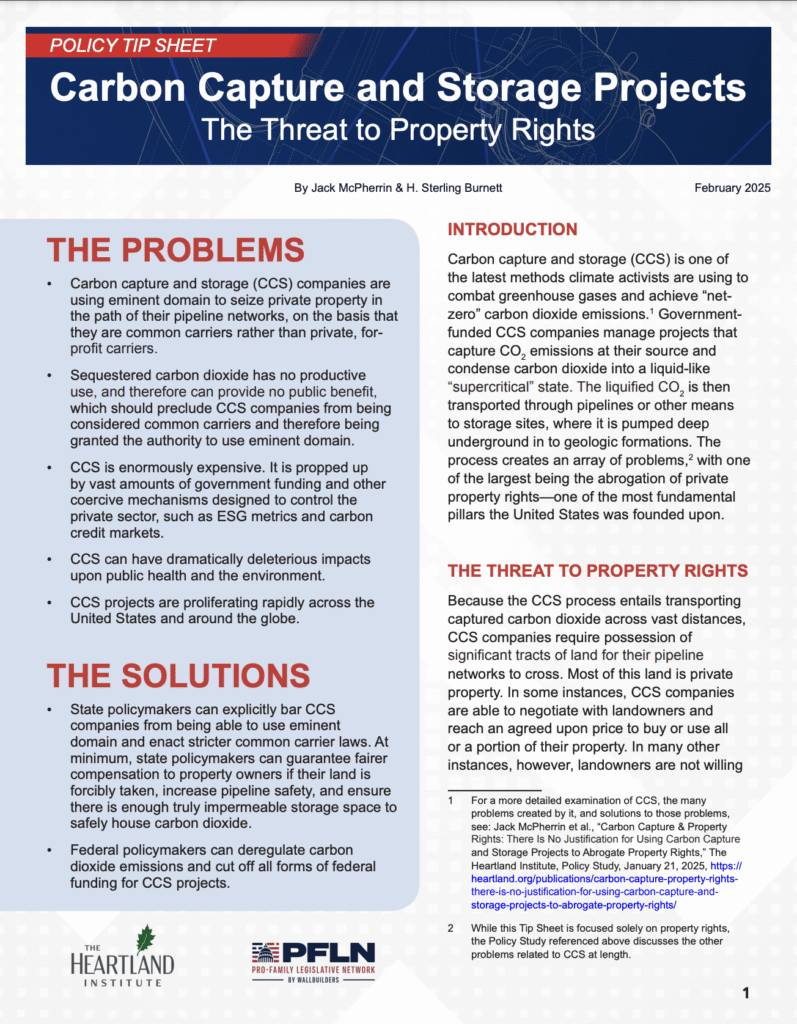
Carbon Capture and Storage Projects: The Threat to Property Rights

Carbon capture and storage (CCS) is one of the latest methods climate activists are using to combat greenhouse gases and achieve “net-zero” carbon dioxide emissions. Government-funded CCS companies manage projects that capture CO2 emissions at their source and condense carbon dioxide into a liquid-like “supercritical” state. The liquified CO2 is then transported through pipelines or other means to storage sites, where it is pumped deep underground in to geologic formations. The process creates an array of problems, with one of the largest being the abrogation of private property rights—one of the most fundamental pillars the United States was founded upon.

Read the rest of the Policy Tip Sheet here.

Reach out to us here if you would like assistance with legislation in your state.

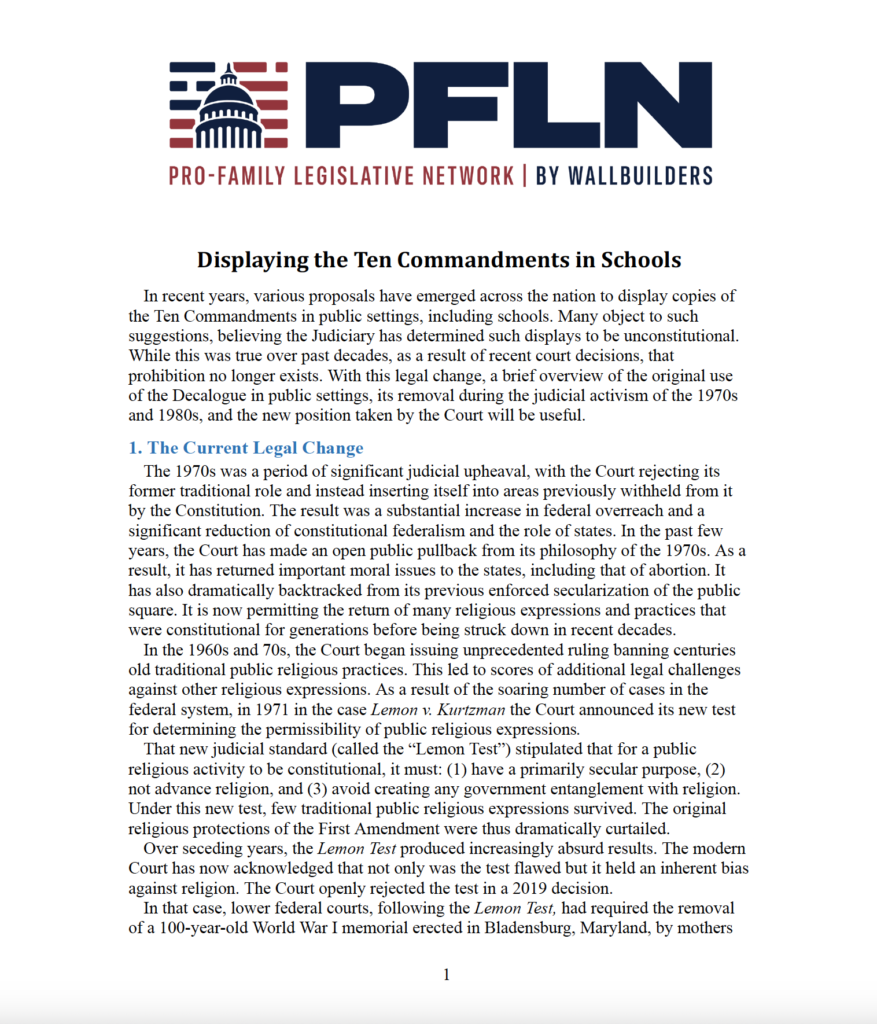
Displaying the Ten Commandments in Schools

In recent years, various proposals have emerged across the nation to display copies of the Ten Commandments in public settings, including schools. Many object to such suggestions, believing the Judiciary has determined such displays to be unconstitutional. While this was true over past decades, as a result of recent court decisions, that prohibition no longer exists. With this legal change, a brief overview of the original use of the Decalogue in public settings, its removal during the judicial activism of the 1970s and 1980s, and the new position taken by the Court will be useful.

To read the full brief on the history of the Ten Commandments in America’s public schools, click here.

If you would like assistance with legislation on the topic in your state, please reach out to us at PFLN. We are here to assist you.

Pro-IVF Bills Are Proliferating. Pro-Life and Pro-Family Legislators Must Be Wary.

Legislation designed to ensconce the “right” to in vitro fertilization (IVF) has been introduced in several states during the 2025 legislative sessions. IVF is promoted as a way for women and couples that cannot conceive a child naturally to achieve pregnancy. And, while millions of children have been conceived through IVF, the process entails significant risks to the health of women and children that must be more widely understood.

Advocates frame pro-IVF bills as protecting individual rights surrounding the pursuit of creating a family. For example, North Dakota HB 1477 stipulates that “the state or any political subdivision of the state may not implement, administer, or enforce any law, rule, or policy that has the effect of prohibiting, limiting, delaying, or impeding access to assisted reproduction services or fertility treatment, or otherwise violate the rights provided for in this section.”

The bill goes on to list the rights of the individual, which include receiving fertility treatments from health care providers and entering contracts with health care providers to handle, test, store, ship, and dispose of an individual’s reproductive genetic material. Similar bills—pushing the same individual rights-oriented narrative—have been introduced in Texas, Tennessee, Maryland, Vermont, and several other states.

Advocates of these bills are attempting to construct a narrative where anyone who opposes pro-IVF bills is an enemy of freedom, women, children, and families. However, this is a false narrative; nothing could be further from the truth. These bills—written and heavily lobbied for by major players in the fertility industry such as Planned Parenthood—do nothing to protect women or children. The IVF industry is almost entirely unregulated and can cause significant harm to those who are unable to make a choice (children) or are unaware of the risks (women).

Harms to Children

The most obvious and severe harm to children is the violation of a child’s right to life. IVF involves simply discarding embryos that are deemed undesirable, which is the equivalent of aborting children. In fact, more babies are likely killed each year as a result of IVF than through more traditional methods of abortion.

Studies have shown that approximately 7 percent of embryos are ultimately implanted. The remaining 93 percent of embryos—millions of unborn children—are either outright destroyed or indefinitely frozen, with small odds of ever being used. Often, embryos are discarded simply because they are considered “undesirable,” such as being the wrong sex or having genetic abnormalities. The United States is a particularly popular destination for IVF because most U.S. clinics allow for this type of embryo selection, which—while essentially being a form of modern-day eugenics—is incredibly lucrative. Profits to the fertility industry are expected to soar from $18,475 billion in 2021 to $28,236 billion by 2025.

On top of this, the few babies that end up being allowed to survive the IVF process are prone to significant physical, cognitive, and developmental disabilities. Research has indicated that children born through IVF are at higher risk of cardiovascular disease, cancer, brain damage, and other substantial health risks. Studies have also shown that children born through IVF have a much higher risk of cognitive impairment; one study found that IVF babies are 58 percent more likely to have intellectual disabilities by the age of eight or older.

Children created through IVF can also struggle with many different developmental problems. For example, it has been estimated that between 30,000 and 60,000 children per year are born to third parties, which can lead to identity problems stemming from the fact that these children do not know the identities of their biological mother and father.

Further, because these children are born from anonymous sperm or egg donations—which is a largely unregulated process—dozens or even hundreds of half-siblings could be living in the same geographic area and be entirely unaware of it. As those children grow up together, they could accidentally begin incestuous relationships with their relatives and produce offspring of their own.

Harms to Women

As with children, there are many ways that women can be harmed through the IVF process. The earliest stage of IVF entails injecting hormonal medications to stimulate a woman’s ovaries, which can result in several severe side effects, including ovarian hyperstimulation syndrome (OHSS). In severe cases, OHSS can be life-threatening.

During the egg retrieval phase, organs near the ovaries can be damaged. Though uncommon, this can require emergency surgery or even blood transfusions. This phase can also result in pelvic infections; in severe cases, surgery may need to be performed to remove the ovaries, fallopian tubes, and/or the uterus.

Further, IVF makes significant pregnancy complications more likely to occur. Having a pregnancy with more than one baby—such as twins or triplets—is more common with IVF. This poses significant risks to both the mother and/or the children, including high blood pressure, gestational diabetes, maternal hemorrhage, miscarriage, and premature birth—the last of which often leads to lifelong health problems for the child.

Ultimately, as the IVF-induced harms to children and women make clear, opposition to pro-IVF bills is entirely justified. Legislators should not fall prey to the false narrative that any resistance to pro-IVF bills constitutes being an enemy of families and freedom.It is impossible to be pro-IVF while also being pro-women, pro-children, pro-family, and pro-life.

If you would like assistance with similar legislation in your state, please reach out to us at PFLN. We are here to assist you.


Carbon Capture & Property Rights

The Heartland Institute 5 Carbon capture and storage (CCS) projects have become an increasingly popular method by which climate activists pursue their ultimate goal of global “net-zero” carbon dioxide (CO2) emissions. Rather than focusing upon the societal harms of climate alarmism in general, this paper will focus specifically on the harms inflicted by CCS, with a particular emphasis upon the revocation of private property rights through the use of eminent domain.

This paper begins with a brief background of the chain of events and overarching agenda that has spawned CCS and an explanation of the CCS process. It then covers the significant public health and environmental problems that can be the direct result of CCS projects, as well as the massive public-private partnerships and funding mechanisms that incentivize the proliferation of CCS. The paper will close by clarifying how CCS indeed poses an imminent threat to Americans’ fundamental private property rights and providing specific recommendations for policymakers to protect those rights and push back against the green agenda.

Read the rest of the paper here.

Reach out to us here if you would like assistance with legislation in your state.

Restoring Civics & Government Education: The Failing Social Studies Movement

To preserve America as a federal constitutional republic (the greatest citizen-stewarded self-government on the face of the earth), every citizen must understand both the core principles and the operations of government that sustain us as the longest ongoing constitutional republic in the history of the world. Therefore, every student must be deliberately educated in both government and civics.

At a minimum, a government course must require a thorough study of the content of the US Constitution, the federative republic it establishes, its limited but specifically enumerated powers, and the differing jurisdictions of the varying levels of government. A corresponding civics course must inculcate in each student a thorough understanding of both their rights as well as their duties as a citizen in our federal republic.

Despite these simple thresholds of what should be considered minimal knowledge, current studies repeatedly confirm that students are dismally lacking in these areas of essential knowledge—and have been for the last several years.

To read the full brief on restoring civics by David Barton, click here.

If you would like assistance with legislation on the topic of restoring Civics in your state, please reach out to us at PFLN. We are here to assist you.
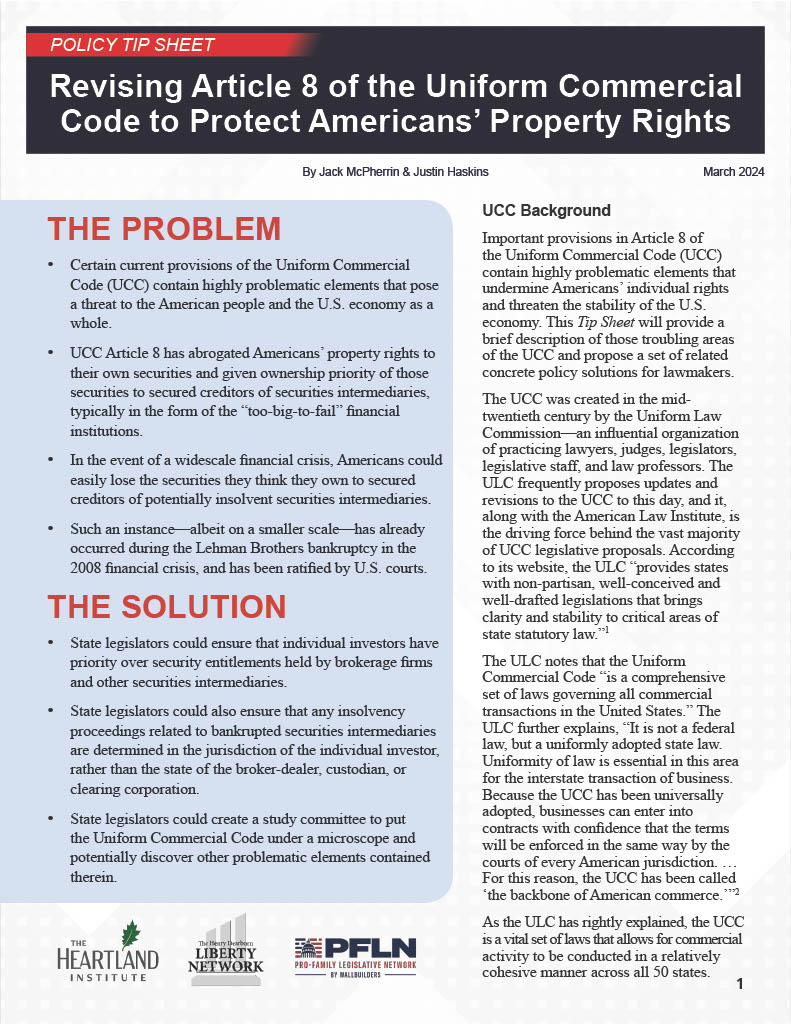
Revising Article 8 of the Uniform Commercial Code to Protect Americans’ Property Rights

Important provisions in Article 8 of the Uniform Commercial Code (UCC) contain highly problematic elements that undermine Americans’ individual rights and threaten the stability of the U.S. economy. This Tip Sheet will provide a brief description of those troubling areas of the UCC and propose a set of related concrete policy solutions for lawmakers.

State legislators could ensure that individual investors have priority over security entitlements held by brokerage firms and other securities intermediaries.

Read the full Policy Tip Sheet for additional information.

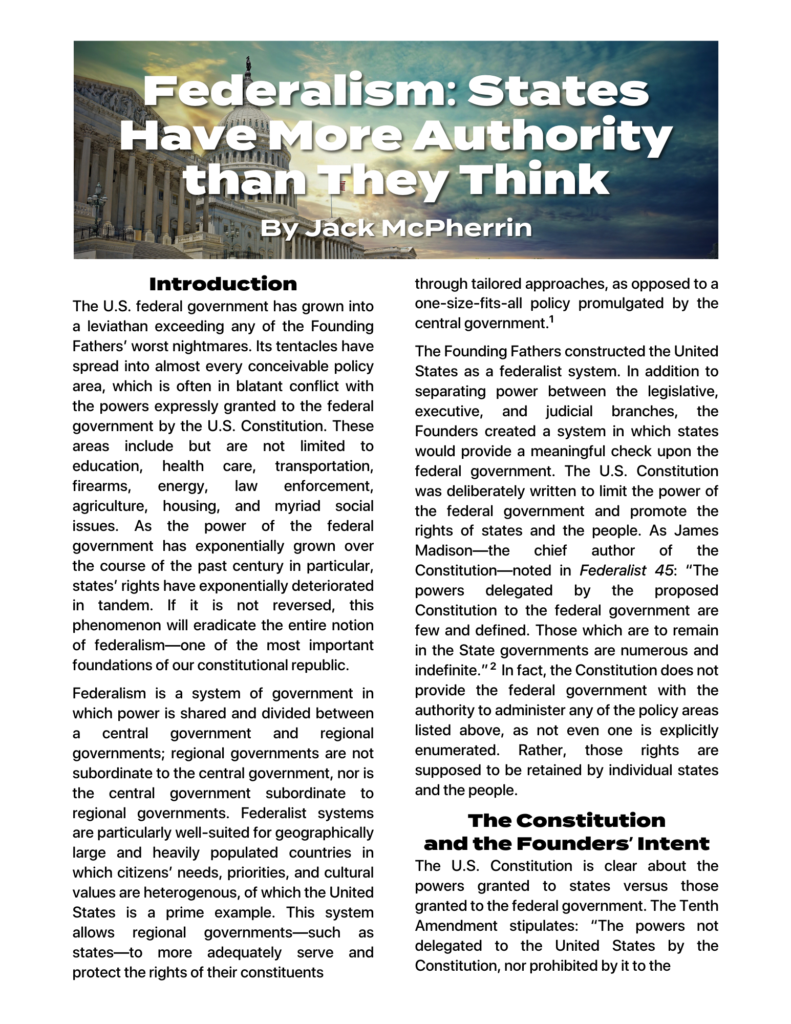
Federalism: States Have More Authority than They Think

The U.S. federal government has grown into a leviathan exceeding any of the Founding Fathers’ worst nightmares. Its tentacles have spread into almost every conceivable policy area, which is often in blatant conflict with the powers expressly granted to the federal government by the U.S. Constitution. These areas include but are not limited to education, health care, transportation, firearms, energy, law enforcement, agriculture, housing, and myriad social issues. As the power of the federal government has exponentially grown over the course of the past century in particular, states’ rights have exponentially deteriorated in tandem. If it is not reversed, this phenomenon will eradicate the entire notion of federalism—one of the most important foundations of our constitutional republic. 

Read the full article here, with key takeaways at the end.

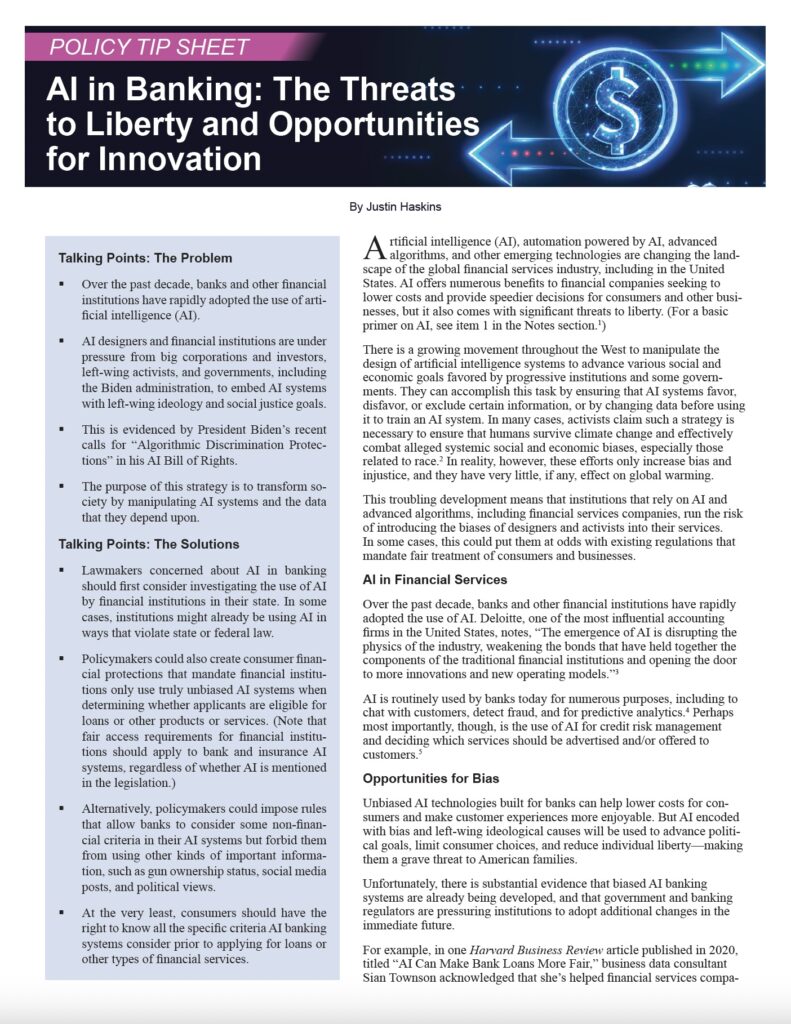
AI in Banking: Threats to Liberty

State legislators are only beginning to explore and understand the implications of artificial intelligence (AI) in their states. Some AI legislation considered in recent legislative cycles has included regulating the use of AI in education, prohibiting false representations of candidates in political advertising, and prohibiting a person from knowingly possessing, controlling, creating or intentionally viewing representations generated by AI of child pornography. All of these reforms are important for legislators to consider. However, it’s crucial that legislators take a proactive role in shaping AI policy, particularly in the growing area of AI in banking.

As the Policy Tip Sheet below explains, “financial institutions that rely on AI and advanced algorithms, including financial services companies, run the risk of introducing the biases of designers and activists into their services. In some cases, this could put them at odds with existing regulations that mandate fair treatment of consumers and businesses.” 

Read the rest of the Policy Tip Sheet here.

Reach out to us here if you would like assistance with legislation in your state. For more information on AI, see our Tip Sheet AI in Criminal Justice and AI in ESG.

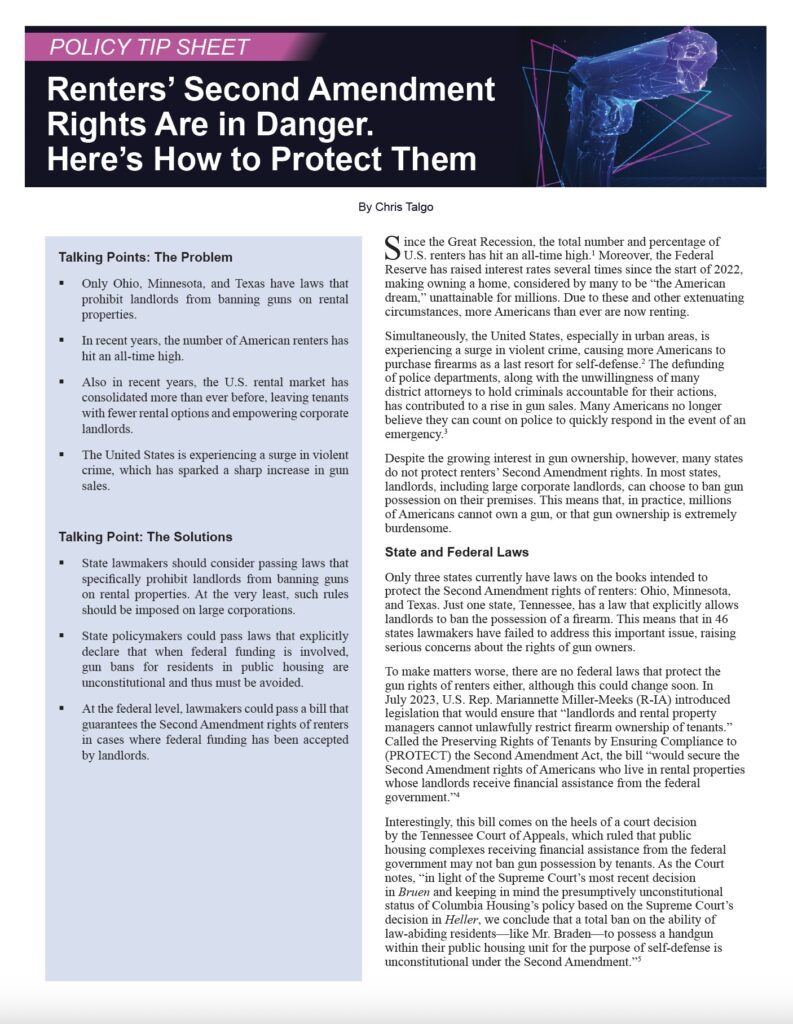
Renters’ Second Amendment Rights are in Danger

In recent years, the number of American renters has hit an all-time high, and simultaneously, crime has also surged. This should prompt lawmakers nationwide to review and update state statutes to ensure Americans can exercise their Second Amendment rights.

The Policy Tip Sheet Below States in part: 
“In most states, landlords, including large corporate landlords, can choose to ban gun possession on their premises. This means that, in practice, millions of Americans cannot own a gun, or that gun ownership is extremely burdensome.”

Does your state protect renters’ Second Amendment Rights? Not many states do. 
“Only three states currently have laws on the books intended to protect the Second Amendment rights of renters: Ohio, Minnesota, and Texas. Just one state, Tennessee, has a law that explicitly allows landlords to ban the possession of a firearm. This means that in 46 states lawmakers have failed to address this important issue, raising serious concerns about the rights of gun owners.”

Read the rest of the Policy Tip Sheet here

Reach out to us if you would like assistance with legislation in your state.