Atmospheric Modification: Frequently Asked Questions

This FAQ is designed to help state legislators understand the basic terms, history, risks, and policy questions surrounding atmospheric modification, including public concerns about “chemtrails,” ordinary aircraft contrails, cloud seeding, traditional weather modification, and geoengineering. State lawmakers have a responsibility to respond to constituent concerns, to understand the programs and regulatory frameworks already in place within their states, and to evaluate whether additional oversight or clarification is warranted. Because activities in the atmosphere can affect air quality, water systems, ecosystems, and public trust, clear information and transparent governance are essential.

This resource is intended to provide a factual foundation about a growing and complex issue to support informed decision-making, public confidence, and responsible stewardship of shared environmental resources. It is split into five overarching sections with thematically linked questions. Sources are provided for each section at the end of the document.

Read the full FAQ here.

Reach out to us here if you would like assistance with legislation in your state.
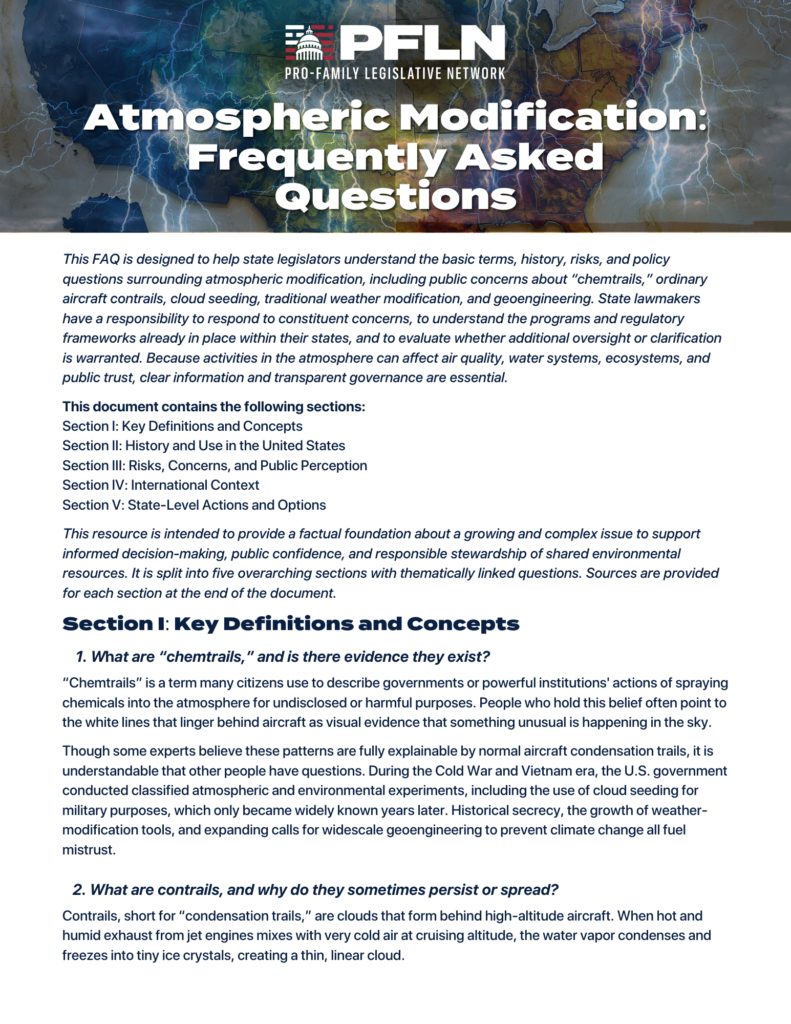
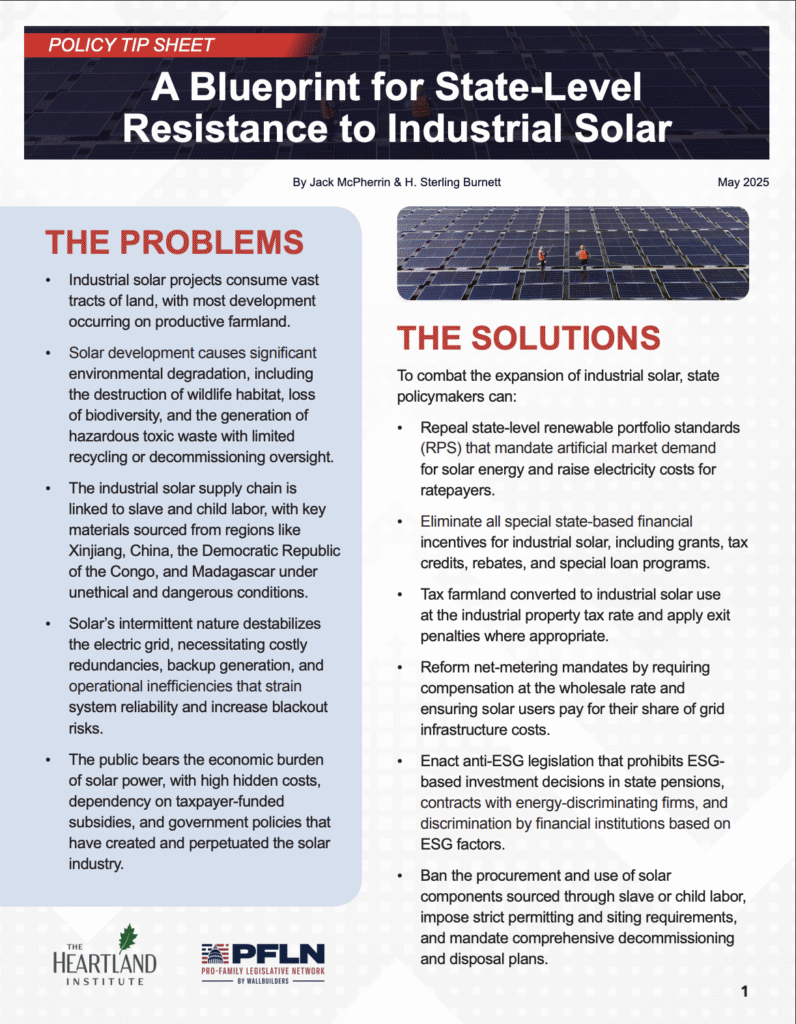
How State Can Push Back Against the Destructive Expansion of Industrial Solar Power

U.S. industrial solar development has increased dramatically in recent years, spurred by aggressive governmental regulations, subsidies, and other incentives. As opposed to residential solar installations, which are placed on rooftops and used primarily for property owners’ electricity consumption, industrial solar installations are typically ground-mounted and designed for larger-scale electricity generation. Industrial solar projects, which can be considered synonymous with “utility-scale solar” for the purposes of this paper, sell the electricity they generate directly to utilities to provide power for the electric grid.

Climate alarmists and their allies in government and the private sector herald the use of solar power and other renewable energy sources as critical to prevent or mitigate what they claim is an impending climate catastrophe caused by anthropogenic greenhouse gas emissions. Yet, the expansion of industrial solar capacity creates an analogous increase in significant economic and social costs, many of which are hidden or externalized. Further, industrial solar wreaks havoc upon the environment, destroying the very thing its adherents claim they desire to protect. Even if one accepts the nebulous theory that the planet is nearing an apocalyptic

Read the full Policy Study here.

Find the full Policy Tip Sheet here.

Reach out to us here if you would like assistance with legislation in your state.

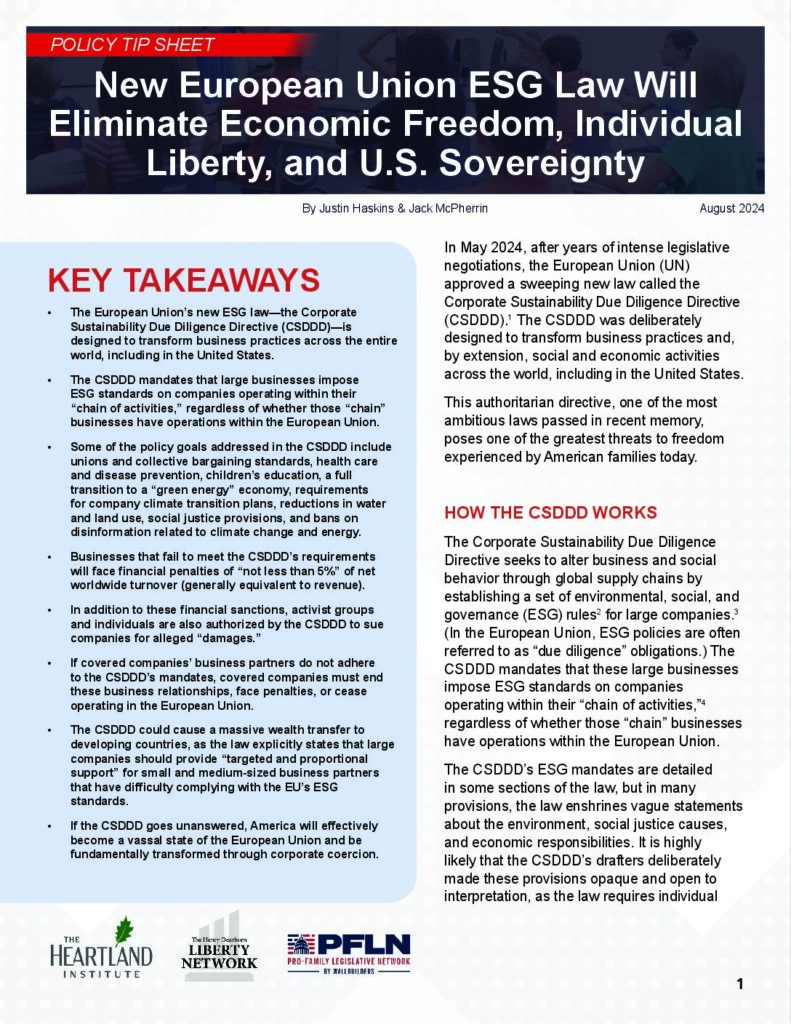
New European Union ESG Law Will Eliminate Economic Freedom, Individual Liberty, and U.S. Sovereignty

In May 2024, after years of intense legislative negotiations, the European Union (UN) approved a sweeping new law called the Corporate Sustainability Due Diligence Directive (CSDDD). The CSDDD was deliberately designed to transform business practices and, by extension, social and economic activities across the world, including in the United States.

This authoritarian directive, one of the most ambitious laws passed in recent memory, poses one of the greatest threats to freedom experienced by American families today.

The informative paper below, written by Justin Haskins and Jack McPherrin of the Heartland Institute, outlines the dangers of this new ESG law, not just for Europe but America as well.

Please get in touch with us if you would like assistance with legislation to combat ESG in your state.

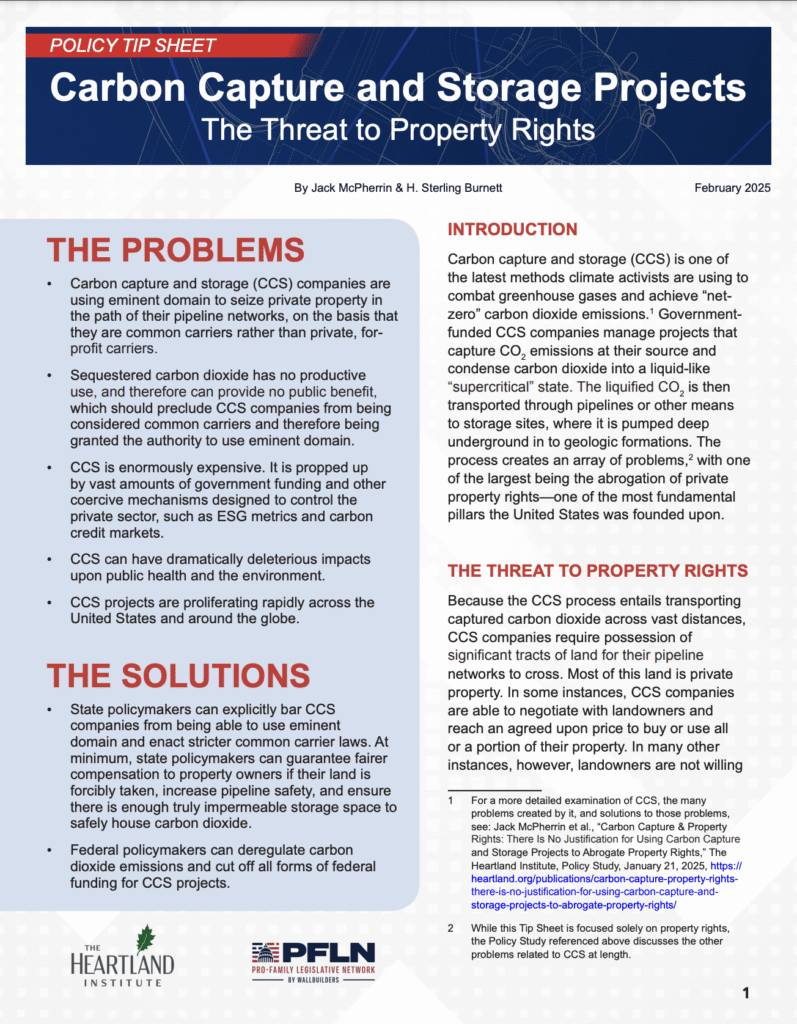
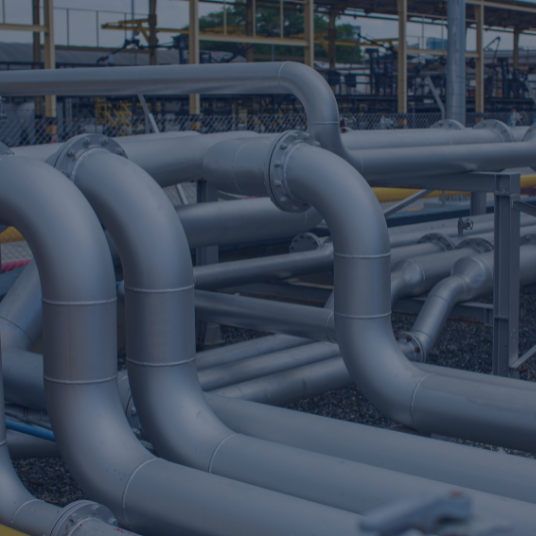
Carbon Capture and Storage Projects: The Threat to Property Rights

Carbon capture and storage (CCS) is one of the latest methods climate activists are using to combat greenhouse gases and achieve “net-zero” carbon dioxide emissions. Government-funded CCS companies manage projects that capture CO2 emissions at their source and condense carbon dioxide into a liquid-like “supercritical” state. The liquified CO2 is then transported through pipelines or other means to storage sites, where it is pumped deep underground in to geologic formations. The process creates an array of problems, with one of the largest being the abrogation of private property rights—one of the most fundamental pillars the United States was founded upon.

Read the rest of the Policy Tip Sheet here.

Reach out to us here if you would like assistance with legislation in your state.
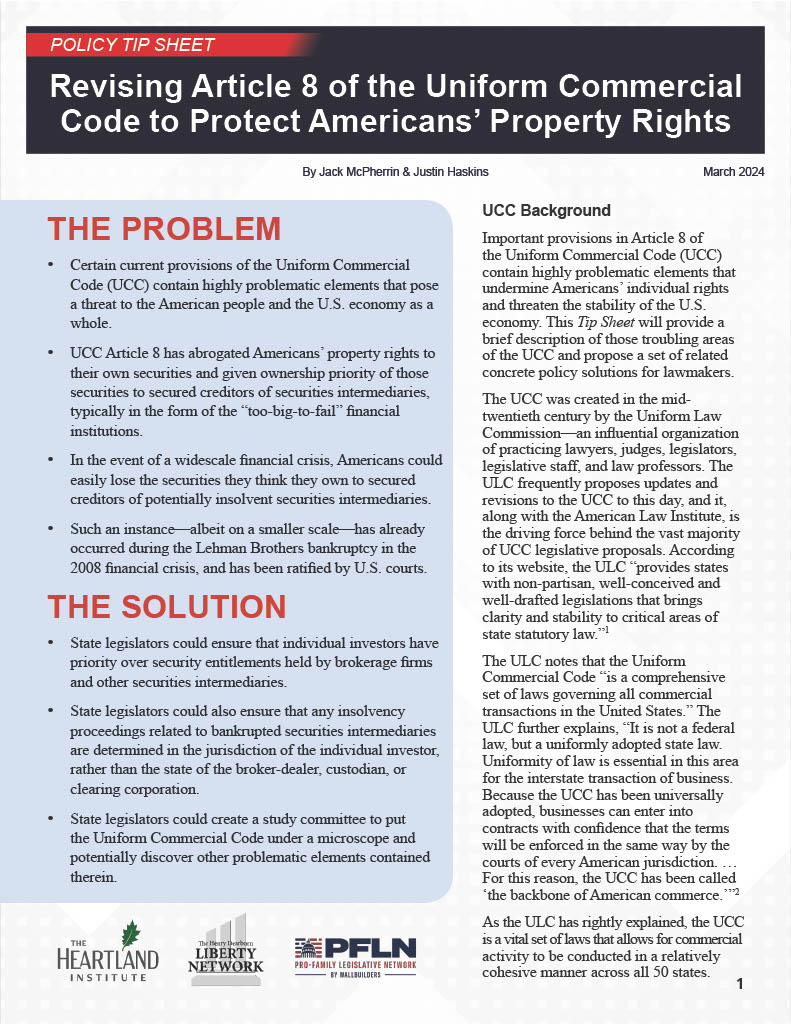
Revising Article 8 of the Uniform Commercial Code to Protect Americans’ Property Rights

Important provisions in Article 8 of the Uniform Commercial Code (UCC) contain highly problematic elements that undermine Americans’ individual rights and threaten the stability of the U.S. economy. This Tip Sheet will provide a brief description of those troubling areas of the UCC and propose a set of related concrete policy solutions for lawmakers.

State legislators could ensure that individual investors have priority over security entitlements held by brokerage firms and other securities intermediaries.

Read the full Policy Tip Sheet for additional information.

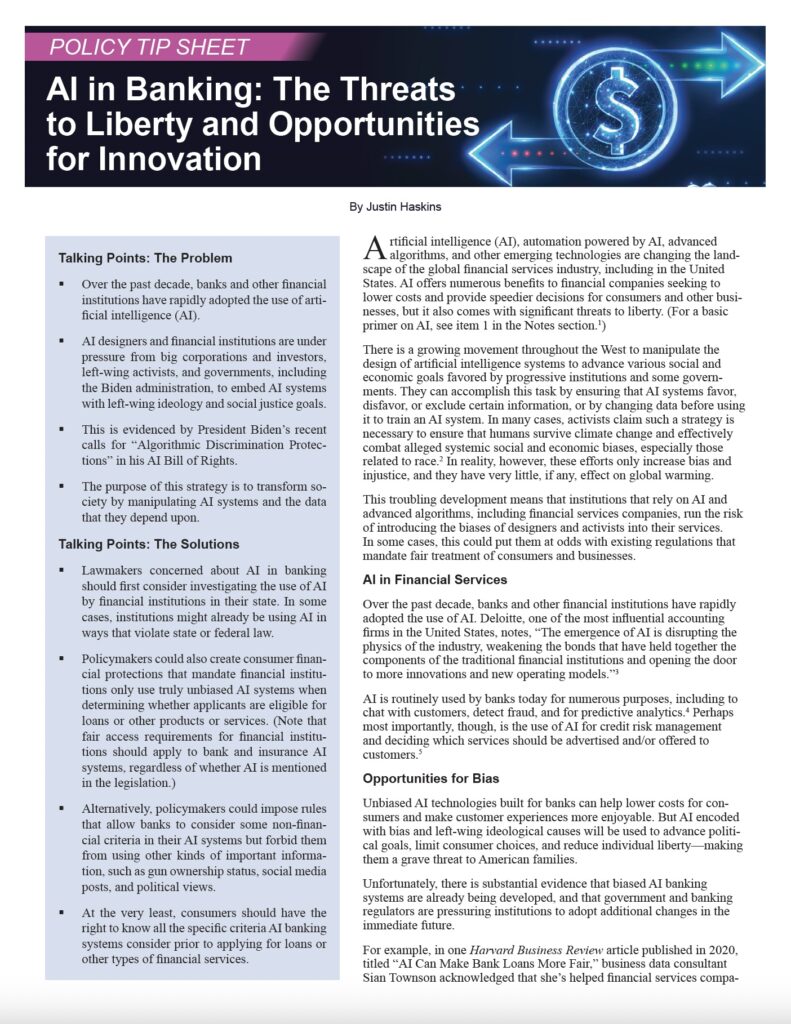
AI in Banking: Threats to Liberty

State legislators are only beginning to explore and understand the implications of artificial intelligence (AI) in their states. Some AI legislation considered in recent legislative cycles has included regulating the use of AI in education, prohibiting false representations of candidates in political advertising, and prohibiting a person from knowingly possessing, controlling, creating or intentionally viewing representations generated by AI of child pornography. All of these reforms are important for legislators to consider. However, it’s crucial that legislators take a proactive role in shaping AI policy, particularly in the growing area of AI in banking.

As the Policy Tip Sheet below explains, “financial institutions that rely on AI and advanced algorithms, including financial services companies, run the risk of introducing the biases of designers and activists into their services. In some cases, this could put them at odds with existing regulations that mandate fair treatment of consumers and businesses.” 

Read the rest of the Policy Tip Sheet here.

Reach out to us here if you would like assistance with legislation in your state. For more information on AI, see our Tip Sheet AI in Criminal Justice and AI in ESG.
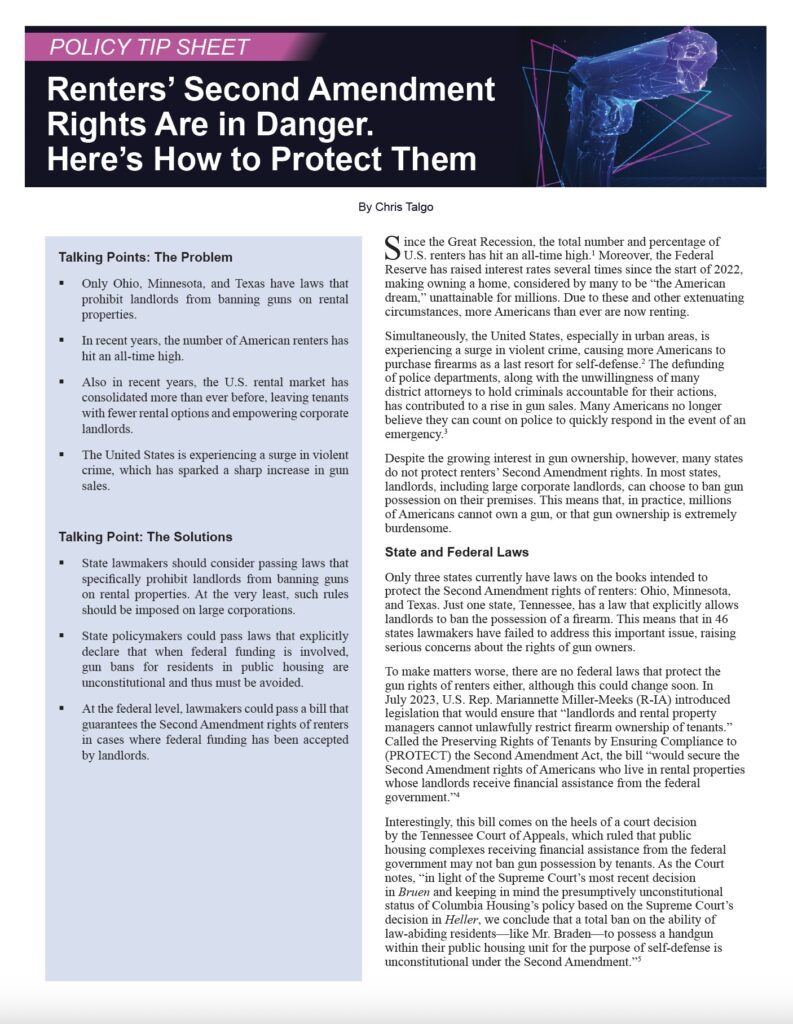
Renters’ Second Amendment Rights are in Danger

In recent years, the number of American renters has hit an all-time high, and simultaneously, crime has also surged. This should prompt lawmakers nationwide to review and update state statutes to ensure Americans can exercise their Second Amendment rights.

The Policy Tip Sheet Below States in part: 
“In most states, landlords, including large corporate landlords, can choose to ban gun possession on their premises. This means that, in practice, millions of Americans cannot own a gun, or that gun ownership is extremely burdensome.”

Does your state protect renters’ Second Amendment Rights? Not many states do. 
“Only three states currently have laws on the books intended to protect the Second Amendment rights of renters: Ohio, Minnesota, and Texas. Just one state, Tennessee, has a law that explicitly allows landlords to ban the possession of a firearm. This means that in 46 states lawmakers have failed to address this important issue, raising serious concerns about the rights of gun owners.”

Read the rest of the Policy Tip Sheet here

Reach out to us if you would like assistance with legislation in your state.

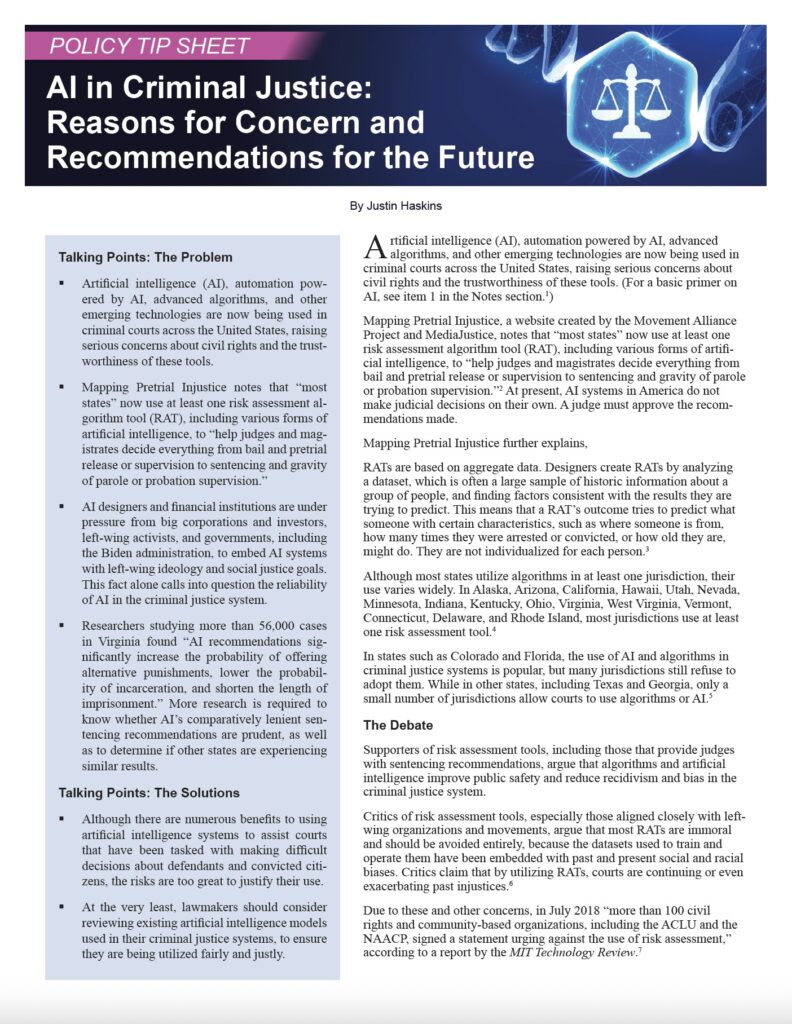
AI in Criminal Justice: Reasons for Concern and Recommendations for the Future

The advancement and adoption of AI has occurred so rapidly, state legislatures have their work cut out for them to ensure their state statutes are up to date to address the emerging challenges AI introduces. One of the most serious threats AI poses to Americans is using AI in government agencies, specifically in the criminal justice system. 

The Tip Sheet below states in part: “Artificial intelligence (AI), automation powered by AI, advanced algorithms, and other emerging technologies are now being used in criminal courts across the United States, raising serious concerns about civil rights and the trustworthiness of these tools. Mapping Pretrial Injustice notes that ‘most states’ now use at least one risk assessment algorithm tool (RAT), including various forms of artificial intelligence, to ‘help judges and magistrates decide everything from bail and pretrial release or supervision to sentencing and gravity of parole or probation supervision.’” 

Read the rest of the Policy Tip Sheet here

Reach out to us here if you would like assistance with legislation in your state. For more information on AI, see our Tip Sheets on AI in Banking and AI in ESG.
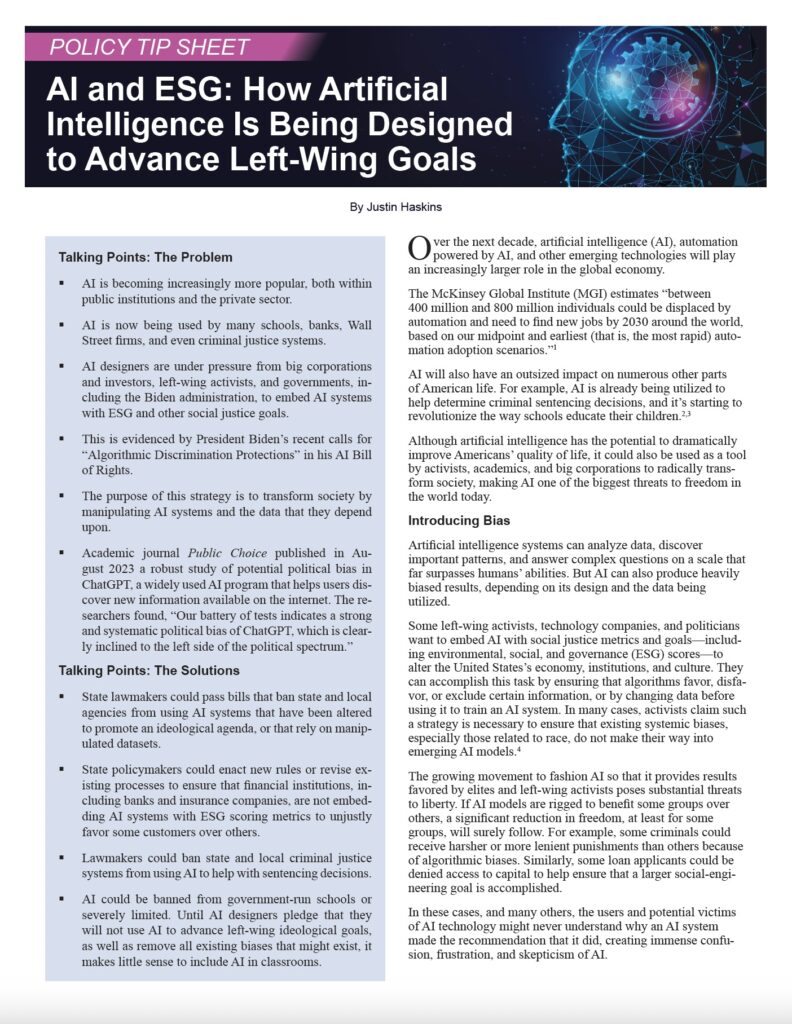
AI and ESG: How Artificial Intelligence is Being Designed to Advance Left-Wing Goals

Artificial intelligence has the potential to dramatically improve Americans’ quality of life, but it could also be used as a tool by activists, academics, and big corporations to radically transform society, making AI one of the biggest threats to freedom in the world today.

Lawmakers should carefully consider the use of environmental, social governance (ESG) metrics in AI and the implications it could have for their states’ key industries and values.

Read the rest of the Policy Tip Sheet here

Reach out to us here if you would like assistance with legislation in your state. For more information on AI, see our Tip Sheets on AI in Banking and AI in Criminal Justice.
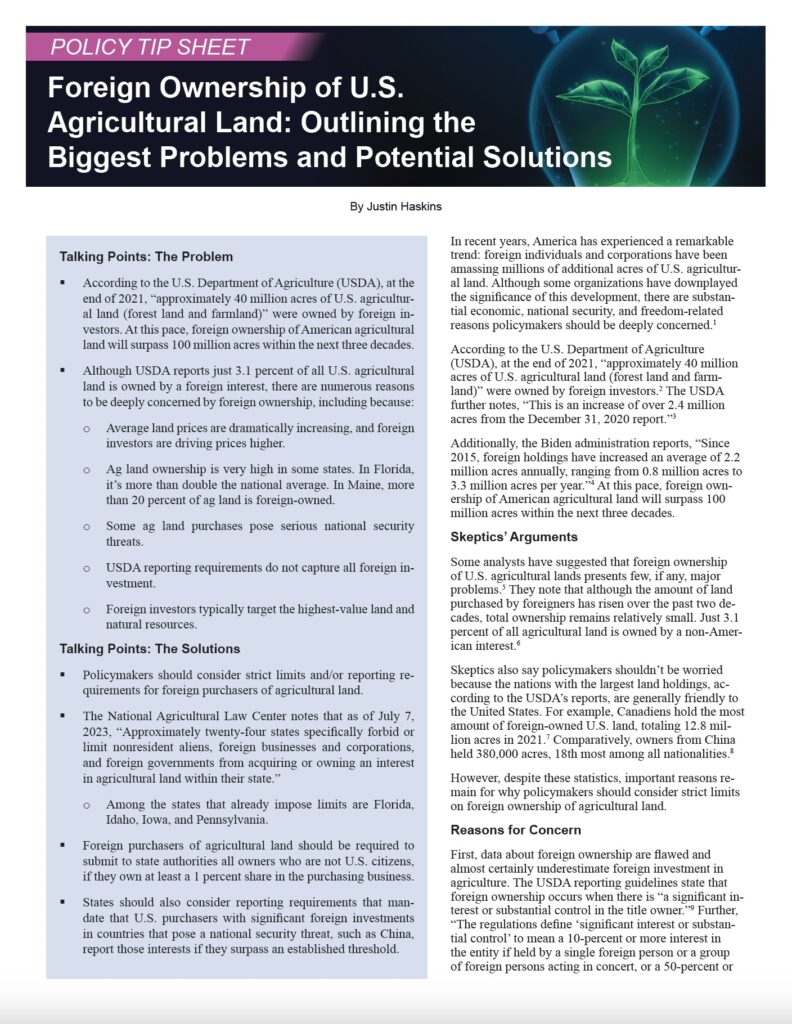
Foreign Ownership of U.S. Agriculture Land: Outlining the Biggest Problems and Potential Solutions

In recent years, America has experienced a remarkable trend: foreign individuals and corporations have amassed millions of additional acres of U.S. agricultural land. Although some organizations have downplayed the significance of this development, there are substantial economic, national security, and freedom-related reasons policymakers should be deeply concerned. 

It is crucial that we address this issue with the seriousness it deserves. The Tip Sheet below contains current statistics on foreign land ownership in the United States,  the risk foreign land ownership poses to Americans, and practical policy solutions legislators can consider for their states. 

Read the rest of the Policy Tip Sheet here

Reach out to us here if you would like assistance with legislation in your state.